What are the best bags for food delivery?
Insulated, reusable and printed with the restaurant’s brand. A foil-lined non-woven tote keeps food in better condition than paper and keeps getting used after the meal. See the bag →
SOLUTIONS FOR FOOD BUSINESSES
Custom insulated delivery bags by product type, industry, printing method, quantity and business goal. Every new design begins with a free consultation and artwork review. After the artwork is approved, the exact printing-color count, one-time color setup, delivery cost and personalized checkout are confirmed before production.
Custom food delivery bags are reusable insulated totes printed with a restaurant’s own artwork. Eco Delivery Bags builds custom insulated food delivery bags for restaurants that want takeout bags customers keep: a 120 GSM woven exterior, foil lining, 50-pound capacity and printable front, back, side and base panels.
Whether you are comparing restaurant delivery bags, custom takeout bags or reusable food delivery bags for the first time, the starting point is the same: 200 bags to test, 500 for regular use, 5,000 for the full campaign.
See the bag →Wholesale food delivery bags and bulk insulated takeout bags are quoted by quantity, artwork and delivery option. A 5,000-bag run is the standard bulk package; larger and multi-location programs are quoted individually, and approved color setup can be reused on unchanged reorders.
Commercial food delivery bags for groups, franchises and central kitchens can share one design while each location keeps its own QR campaign code.
Plan a wholesale or bulk order →Custom printed food delivery bags carry more than a logo. Branded takeout bags can show food photography, menu highlights, contact details and a QR code, printed on panels that respect the real seams and folds of the bag.
Food delivery bags with logo artwork start at 200 bags. Personalized restaurant bags with all-panel artwork are part of the 5,000-bag campaign, and every design is proofed before production.
See design services →The bag is a non-woven polypropylene tote at 120 GSM, the material most restaurants mean when they search for non-woven food delivery bags or non-woven takeout bags. It is light, strong, reusable and prints cleanly.
Custom non-woven bags with logo artwork are available on every run, and the insulated non-woven construction is the same whether you order 200 or 5,000.
Read the specifications →Every Eco Delivery Bag is foil lined. The aluminum foil thermal lining slows temperature change for hot food and cold food alike, which is why insulated restaurant bags keep orders in better condition during pickup and third-party delivery.
If you are comparing thermal food delivery bags, insulated carryout bags or hot and cold food delivery bags, request a free unprinted sample and test it with your own orders.
Request a sample →Restaurant delivery bags do two jobs: protect the order and carry the brand. Custom restaurant delivery bags from Eco Delivery Bags are built for takeout, pickup and delivery-app orders, with menu and ordering links printed where customers will see them again.
Reusable restaurant takeout bags replace disposable packaging that disappears after one meal. Start with 200 bags for one location or 5,000 for the full campaign.
Custom bags for restaurants →Food truck delivery bags and custom bags for food vendors need bold, readable artwork and a QR code that opens the schedule or the menu. A reusable branded bag keeps the truck’s name in view after the event, lunch stop or festival is over.
Concession and event vendors use the same insulated tote; the artwork changes, the bag does not.
Custom bags for food trucks →Insulated catering bags make professional handoffs easier and keep the caterer’s name with the client after the event. Custom catering bags can print services, event types, a phone number and a QR code to a booking page.
The tote suits boxed meals, bowls and stacked containers up to 50 pounds; reusable catering bags are often reordered season after season with the same approved artwork.
Custom bags for caterers →Ghost kitchen delivery bags are often the only physical object a customer sees from a delivery-only brand. Branded ghost kitchen packaging gives the brand a presence, and the QR code can route the next order to direct ordering instead of an app.
Cloud kitchen takeout bags work best as one design per brand so each concept stays recognizable.
Custom bags for ghost kitchens →Insulated meal prep bags fit recurring pickup and delivery programs: customers bring the bag back each week and the brand travels with it. Custom meal delivery bags can print storage guidance, reorder links and a QR code to the subscription page.
Meal prep bags wholesale pricing follows the standard 500- and 5,000-bag packages.
Custom bags for meal prep →Custom takeout bags for cafés, bakery delivery bags and deli delivery bags use the same reusable insulated tote with artwork sized for a counter business. A clean logo, the best-selling item and a QR code to the menu or loyalty page is usually enough.
Cafés and bakeries typically start at 200 or 500 bags.
See every industry →Grab and go food bags and prepared food takeout bags for vending and market businesses keep chilled items in better condition on the way home and give the brand a second impression later. Custom grab and go bags follow the same 200, 500 and 5,000 packages.
See every industry →Restaurants searching for bags for DoorDash orders or restaurant bags for Uber Eats are usually solving two problems: food arriving in poor condition and a brand that never reaches the customer. An insulated, printed tote addresses both, and the QR code can bring the next order to your own ordering page.
Eco Delivery Bags is an independent supplier; references to DoorDash and Uber Eats describe third-party delivery use cases only, with no affiliation implied.
Packaging for delivery-app orders →A custom food delivery bag supplier should show the product specifications, the exact pricing structure, delivery windows and a proof process before asking for a deposit. Eco Delivery Bags, a restaurant packaging supplier based in Renton, Washington, publishes all of it and serves food businesses across the United States.
Free unprinted samples, a private order portal and a 30% / 70% payment schedule are part of how the company operates as a custom takeout bag supplier.
About the company →The custom bag minimum order is 200 bags. Custom food delivery bag pricing starts at $160 for 200 bags, $340 for 500 and $2,299 for 5,000 full-custom bags during the 2026 launch, plus a one-time print color setup from $65.82 confirmed after the artwork is approved.
To get a custom bag quote, share the quantity, design goal and required date. Custom delivery bag samples are complimentary when unprinted; you cover shipping.
See pricing →Branded restaurant packaging is advertising the customer carries for you. Restaurant marketing bags earn repeat impressions in cars, offices and grocery runs, and a QR code turns takeout packaging branding into a measurable path back to the menu.
If you are collecting restaurant branding ideas or custom restaurant packaging ideas, start with the one object every takeout customer touches.
Read: packaging as reusable advertising →Tamper-evident food delivery bags show a customer whether their order was opened after it left the restaurant. Eco Delivery Bags close with a one-time peel-and-seal adhesive flap on a foil-lined insulated tote, so the order is sealed at your counter and the customer can check the seal at the door.
The seal is evidence, not a guarantee, and it works best with closed food containers and a consistent handoff routine. The bag stays reusable after the seal is opened, and the printed panels keep your brand in front of the customer.
See the tamper-evident seal →COMMON BUYER QUESTIONS, ANSWERED
Short answers to the questions food businesses ask before ordering custom delivery bags, with the page that goes deeper on each one.
Insulated, reusable and printed with the restaurant’s brand. A foil-lined non-woven tote keeps food in better condition than paper and keeps getting used after the meal. See the bag →
Bags customers keep. Strong handles, insulation and a design worth carrying turn a takeout bag into repeat exposure for the restaurant. Restaurant bags →
Use an insulated bag with a foil lining and keep the opening closed during transport. The Eco tote’s flat-mouth opening and lining are built for exactly this. Specifications →
Sealed containers, upright placement and an insulated outer bag that holds the order steady. A 30 × 30 × 20 cm tote fits standard containers without crushing them. How it works →
Print the logo, a signature dish and a QR code on a reusable bag. The order becomes the advertisement, and the QR code becomes the path to the next order. Design services →
Yes. A printed reusable bag is seen every time the customer carries it. Our guide explains how packaging becomes reusable advertising. Read the guide →
Start with capacity, insulation and print area, then match the quantity to real order volume: 200 to test, 500 for regular use, 5,000 for the full campaign. Buyer’s guide →
For restaurants with steady takeout or delivery volume, yes: fewer temperature complaints, better presentation and a bag that keeps marketing the brand. Insulated vs. paper →
Paper is cheaper per unit and gone after one use. A reusable insulated bag costs more per bag and keeps working for months. Compare them →
An insulated bag that protects the food in transit and carries your own ordering link, so the next order can come to you directly. No affiliation with DoorDash is implied. Restaurant bags →
Insulate it, brand it and give it a reason to be kept. The strength test shows what the bag can carry; the QR system shows what it can do afterward. Strength test →
Food photography on the front, menu highlights on the back, a QR code on the side and the brand story on the base. Browse 25 concepts in the gallery. Design gallery →
$160 for 200 bags, $340 for 500 and $2,299 for 5,000 full-custom bags at launch, plus one-time color setup from $65.82 after artwork approval. Pricing →
Directly from Eco Delivery Bags. Bulk and multi-location programs start at 5,000 bags with reusable color setup on reorders. Wholesale & bulk →
Start a free design consultation. Send the logo and brand colors; a mockup comes back before any pricing detail is finalized. Start a request →
Choose a quantity, send your artwork or brand assets, approve the mockup and proof, then confirm the written order with a 30% deposit. How it works →
Yes. Unprinted samples are free; you pay shipping. Branded samples are quoted with color setup. Samples & proofs →
Economy 35–40 days, Standard 29–33, Faster 27–31 or Express about 18–20 business days after final approval and deposit. Delivery windows →
200 bags. It is the lowest-risk way to test the idea before a 500- or 5,000-bag run. See the packages →
The printed code stays the same; the destination behind it can be updated at any time without reprinting. QR system →
Yes. Eco Delivery Bags close with a one-time peel-and-seal adhesive flap, so customers can see whether the order was opened before it reached them. Tamper-evident bags →
Seal the bag at the counter with a one-time adhesive closure. An intact seal at the door is the visible proof, and the restaurant’s printed brand sits right next to it. How the seal works →
Eco Delivery Bags is an independent food-delivery bag supplier based in Renton, Washington, serving food businesses across the United States. References to DoorDash or Uber Eats describe third-party delivery use cases only; no affiliation or endorsement is implied.
About Eco Delivery Bags
Eco Delivery Bags brings the insulated tote, restaurant artwork, QR destination and order experience together so the package can keep working after the meal is gone.
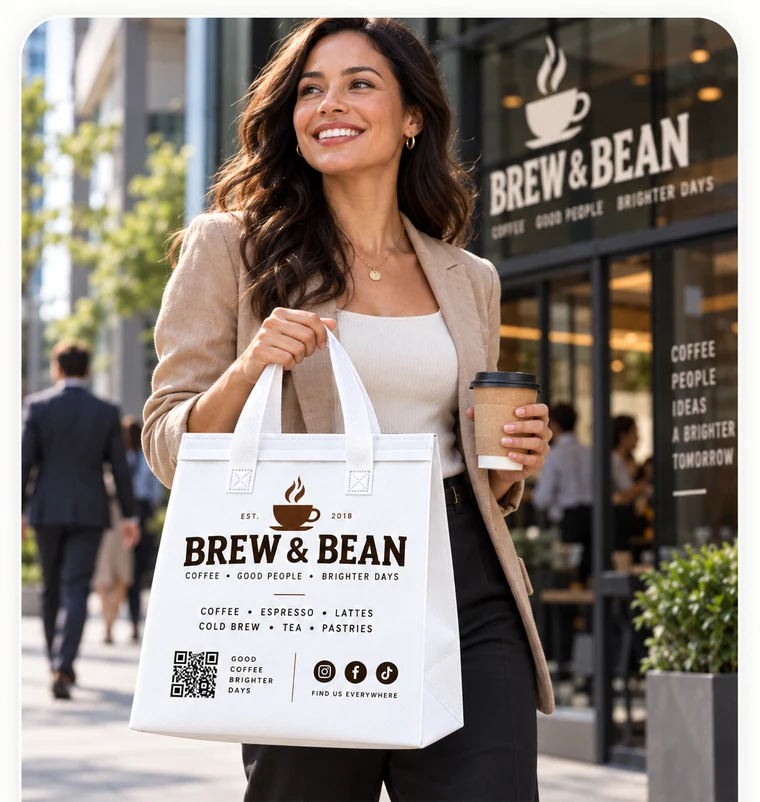
Most takeout packaging completes one job and disappears. A reusable insulated bag can protect the handoff, create a stronger impression and keep the restaurant visible in the customer’s everyday routine.
The goal is to give the customer something useful enough to keep—and give the restaurant a practical path back to the next order.
A stronger, insulated tote can make pickup and delivery feel more intentional before the customer even opens the order.
When the bag is reused in a car, office or grocery routine, the brand can earn impressions that disposable packaging never receives.
Proofs, production, shipping, QR setup and repeat orders are organized around the same customer and design.
Takeout packaging usually disappears after the order. Eco Delivery Bags is built around a different idea: make the package useful enough to keep and strong enough to keep carrying the restaurant’s identity into everyday life.
Eco Delivery Bags serves U.S. food businesses from the Renton/Seattle area, coordinating product, artwork, proof, production, shipping, QR destinations and repeat orders around one clear customer experience.
Share the quantity, design goal and required date. We’ll help organize the right next step without taking payment on this website.
Product specifications
See how the size, woven exterior, foil lining, handles, load capacity and print zones translate into a bag customers can actually use again.
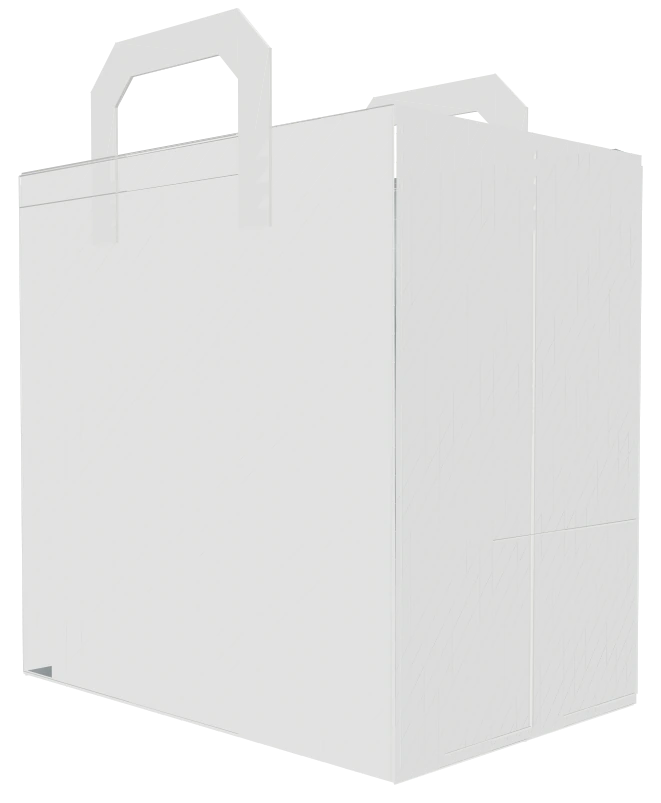
Dimensions and materials matter because they affect how the order carries, how the artwork reads and whether the bag feels useful enough to keep.
The bag is designed to carry substantial takeout orders, help maintain hot or cold food temperatures and give the restaurant a clean, reusable branding surface.
The verified 23 kg specification and internal 50-pound demonstration support individual meals as well as larger takeout orders.
The aluminum-foil interior helps maintain temperature during pickup, transportation and delivery.
Artwork is planned around actual seams, gussets, folds and handles so the proof is believable before production.
Eco Delivery Bags provides a durable, reusable insulated tote designed for restaurants, takeout services, catering businesses, food-delivery operations and other businesses that need reliable, professional food packaging.
| Product | Reusable Insulated Restaurant Delivery Tote |
|---|---|
| Dimensions | 11.8" W × 11.8" H × 7.9" D |
| Metric dimensions | 30 cm × 30 cm × 20 cm |
| Material | 120 GSM woven material |
| Insulation | Aluminum foil thermal lining |
| Opening style | Flat-mouth opening |
| Weight capacity | 50 lbs (23 kg) |
| Temperature protection | Helps maintain hot and cold food temperatures |
| Custom branding | Logos, QR codes, menus, food photography, promotional messages and custom artwork |
| Printing options | Single-color, multicolor and full-color designs, subject to the final production method |
| Reusability | Designed for repeated use |
| Recommended uses | Restaurant takeout, delivery, pickup orders, catering and promotional packaging |
Designed to support up to 50 pounds for individual meals and larger restaurant orders.
The foil-lined interior helps maintain food temperatures during pickup, transportation and delivery.
Your branding travels with every order and can keep promoting the business when customers reuse the bag.
Feature your logo, menu, photography, website, social information, QR codes and promotional offers.
The bag has legitimate seams, folds, handles and gussets. Final artwork must remain within practical print zones and be confirmed against the selected manufacturer’s production template before release.
Share the quantity, design goal and required date. We’ll help organize the right next step without taking payment on this website.
Industry solution
Improve the handoff for offices, events and repeat organizational buyers.
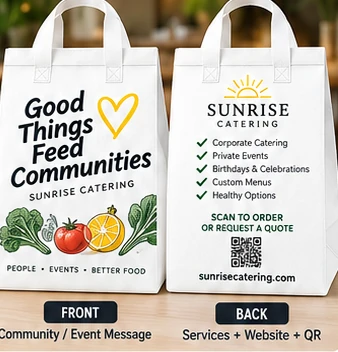
Catering relationships are built on trust, presentation and repeat booking. The bag can reinforce the service and keep the next inquiry path with the customer.
Start with real order volume, the customer handoff and the next action you want the bag to make easier.
A coordinated insulated bag supports a cleaner arrival and handoff.
Use contact and QR information so the organizer does not have to search later.
Reusable packaging can keep the catering brand inside offices and organizations.
Catering orders often involve larger tickets and repeat organizational buyers. The bag can reinforce the service, protect the handoff and make the next booking easier.
A smaller run can validate the concept. A 5,000-bag campaign makes sense when the business has repeat volume and wants the complete QR/page system.
Test the artwork and customer reaction without beginning at the full campaign quantity.
Useful for a busier location or a more meaningful operational test.
All-panel artwork, permanent QR destination and a system designed for ongoing use.
Share the quantity, design goal and required date. We’ll help organize the right next step without taking payment on this website.
Contact Eco Delivery Bags
Tell us the quantity, design goal, delivery question or customer action you want to improve. You do not need every production detail figured out before you contact us.
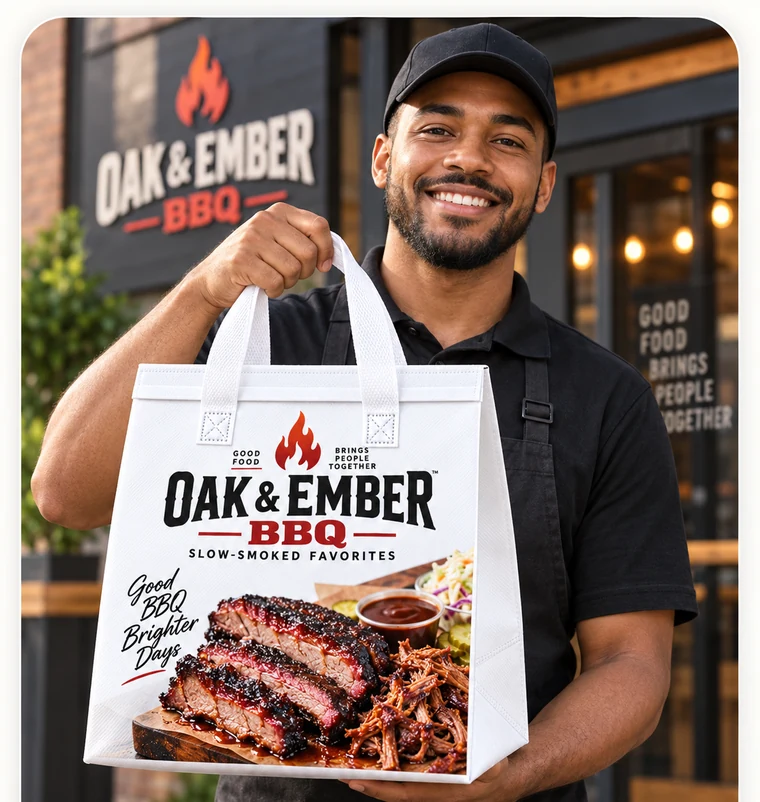
A useful first conversation starts with the business goal—not a technical printing term. Are you trying to improve presentation, test customer response, drive reorders, support a recurring program or standardize several locations?
We can help organize the quantity, artwork, sample, delivery and proof decisions after we understand what the business is trying to accomplish.
Compare 200, 500 and 5,000 bags against real order volume and testing goals.
Bring the logo, photos, menu or QR goal even when the layout is not decided.
Know whether the next step is a sample, mockup, quote, proof or operational follow-up.
Phone: 206-602-7755
Email: [email protected]
Use this form for general information, pricing help, mockup direction, multi-location planning or a custom quantity.
The product
Protect the order, present the restaurant professionally and keep your logo, menu and QR destination moving through the community.
The bag is the last physical touchpoint before the customer leaves—and sometimes the only physical touchpoint for a delivery-first brand. That makes usefulness, presentation and clarity matter.
It is the design the customer can recognize quickly, understand easily and keep using without feeling like they are carrying an advertisement.
Use the strongest panel for the logo, food image or message customers should remember first.
Use the back and side panels for ordering, menu, phone, social or a permanent QR destination.
The woven construction, handles and insulation give the bag a practical life beyond the original meal.
The bag does not just carry the order. A peel-away liner comes off, the fold-over adhesive flap presses shut, and the customer can see at the door whether the seal is still intact. That is a simple, visible promise your restaurant makes on every delivery.
The approved product is the real white woven insulated bag shown throughout this site. It is sized for restaurant handoff, folds more easily than a rigid delivery bag and gives the brand four useful exterior print areas plus the base on full custom runs.
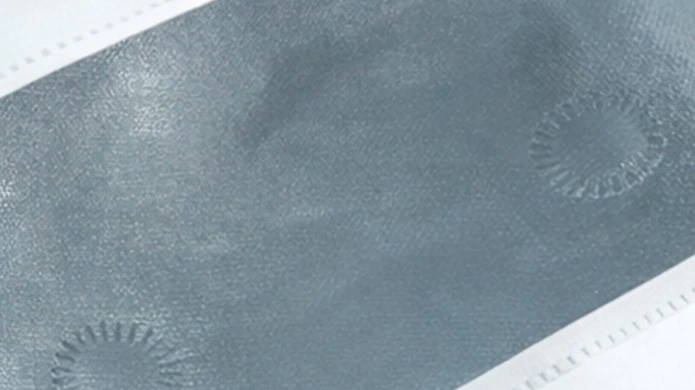
The design system preserves the center folds, seams and unprintable construction areas so the final proof reflects the real product rather than a fantasy mockup.
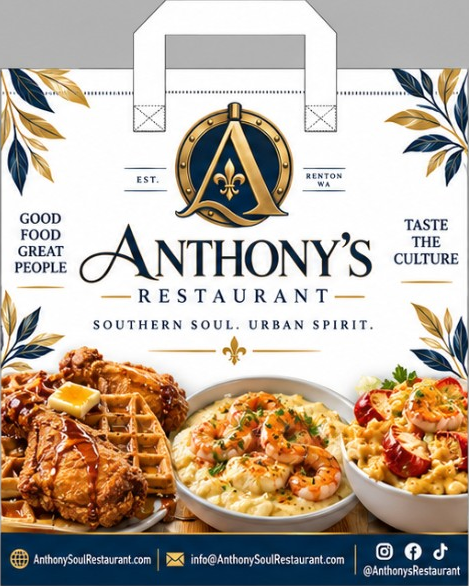
Logo, food image, brand line and high-impact first impression.
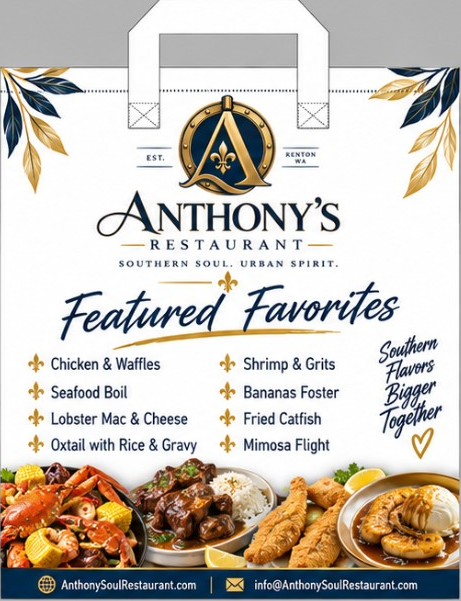
Menu, ordering information, signature dishes or customer-facing story.
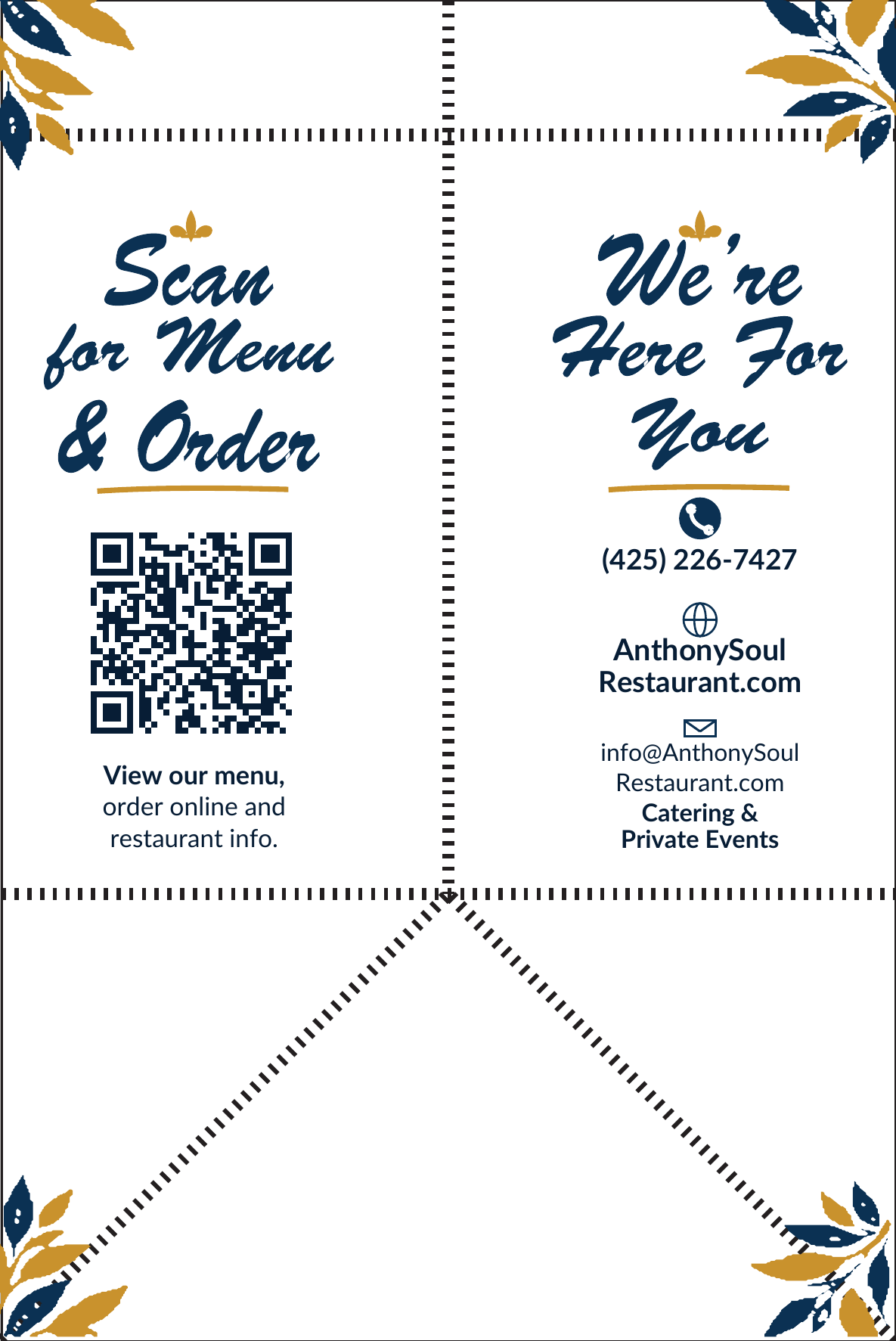
QR, contact, ordering, social, brand story and useful supporting calls to action.
The quantity changes how much of the bag can be developed, but every printed order should be clear, readable and appropriate for the real print zones.
Share the quantity, design goal and required date. We’ll help organize the right next step without taking payment on this website.
Private order experience
Give real customers one secure place for artwork, proofs, approvals, files, payment, production, shipping, QR setup, support and reorders.
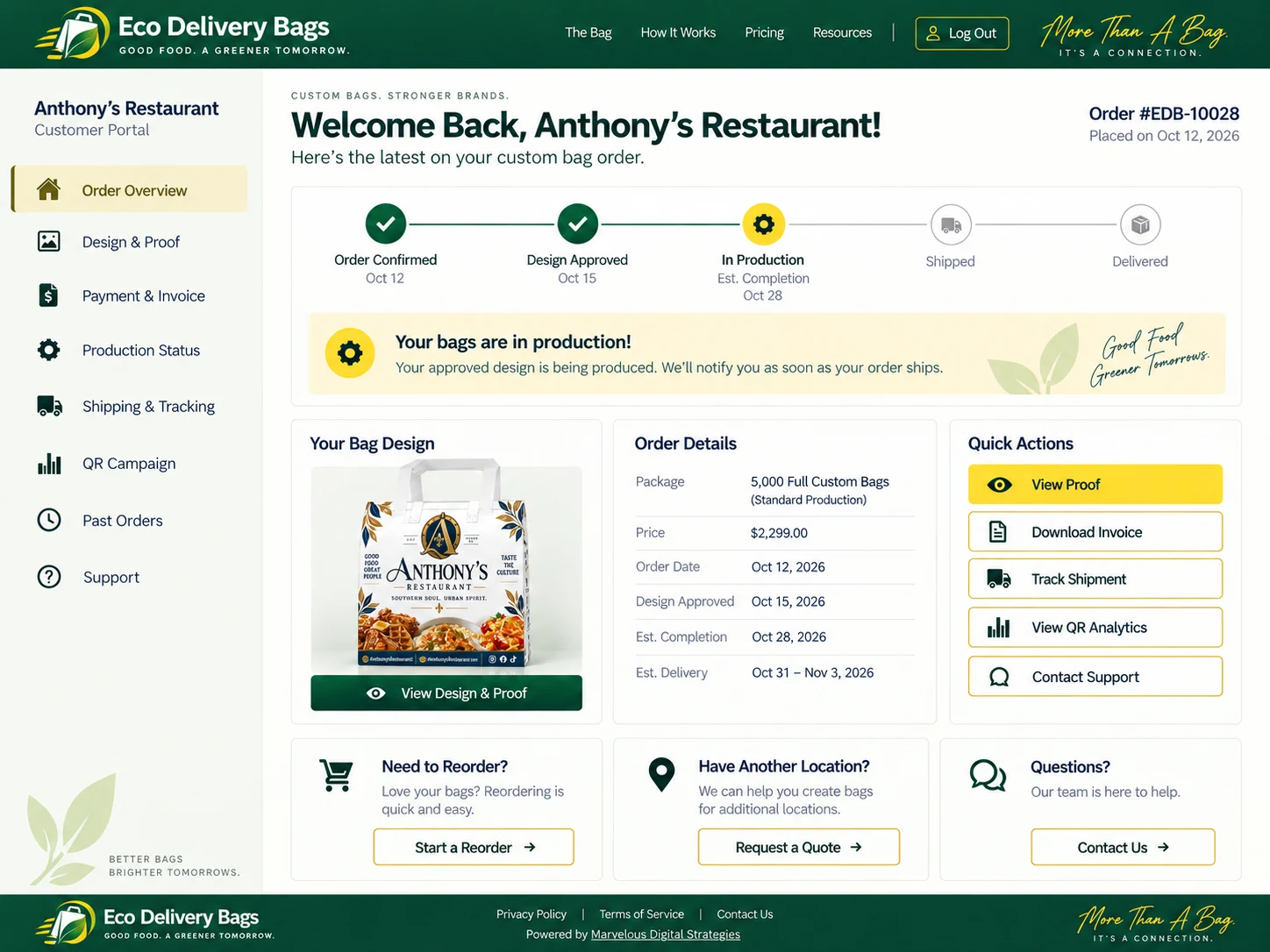
A customer should not have to search through a long inbox to find the current proof, tracking number or approved QR page. The portal keeps each item connected to the correct order.
The portal shows the customer the current approved information while GHL remains the operating record behind the experience.
View the current proof, approve it or request changes with notes tied to the exact order.
Follow payment, production, shipment and tracking without relying on a disconnected status email.
Store artwork, mockups, invoices and shipping documents in the authorized customer/order area.
The portal becomes available when a confirmed customer needs private access to an order, proof, files, payment, production, shipping or QR campaign.
View the current mockup, approve the final proof or request changes with notes.
See production status, shipping status, ship date, carrier and tracking when available.
Preview and approve the guest page, then view campaign information after delivery.
Artwork, mockups, invoices and shipping documents stay connected to the correct customer/order.
Submit a question from the order context so the team does not have to guess what it concerns.
Keep the same location/campaign identity and begin the next request from the previous order.
A portal link must not expose another customer’s order, draft artwork, contact information or files. Access is tied to the verified customer/order relationship, and every approval or change request should update the corresponding record.
These screens show the private order experience customers use to review the current information, approve the right version, upload files and follow progress.
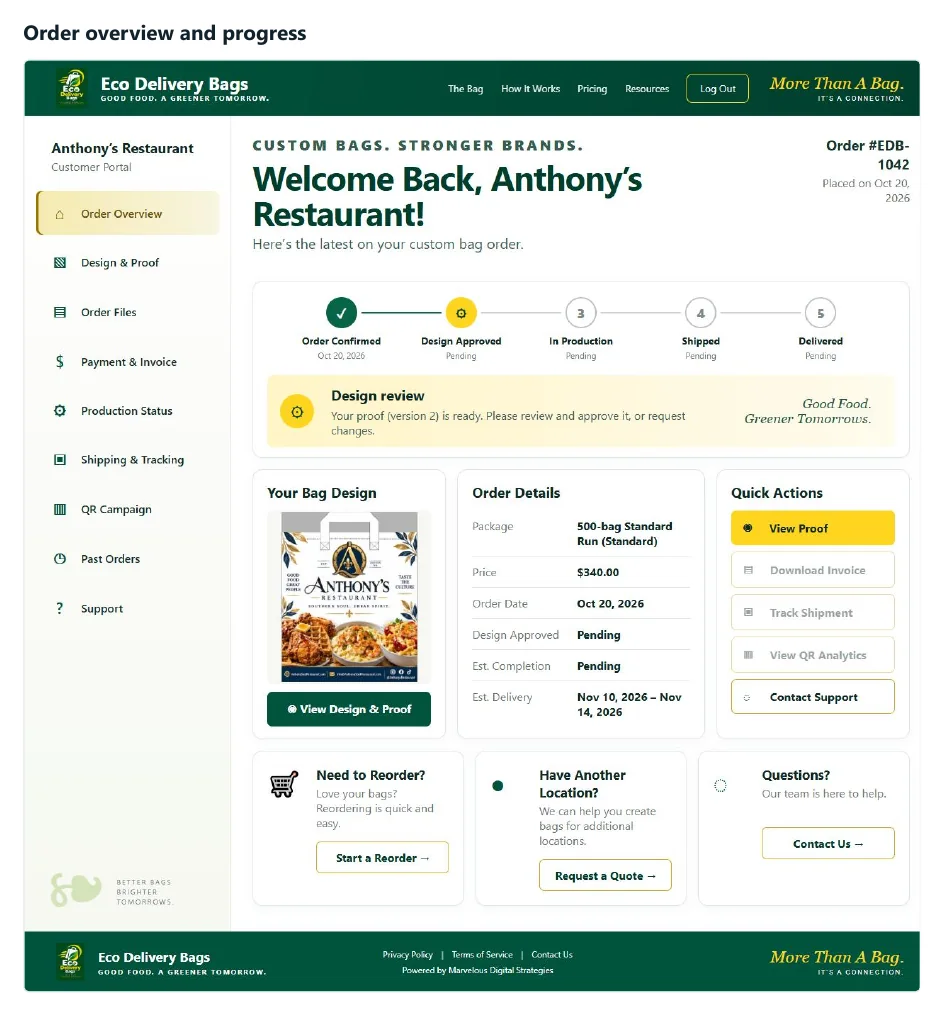
One view for progress, order details and the next available action.
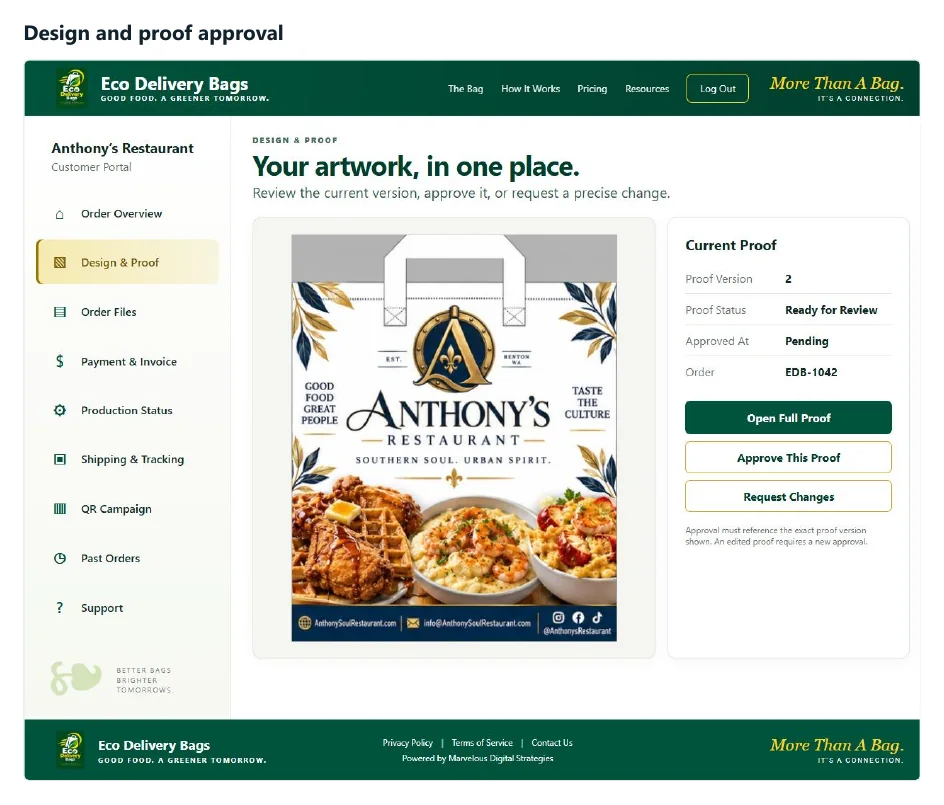
Approve the exact version or request a precise change.
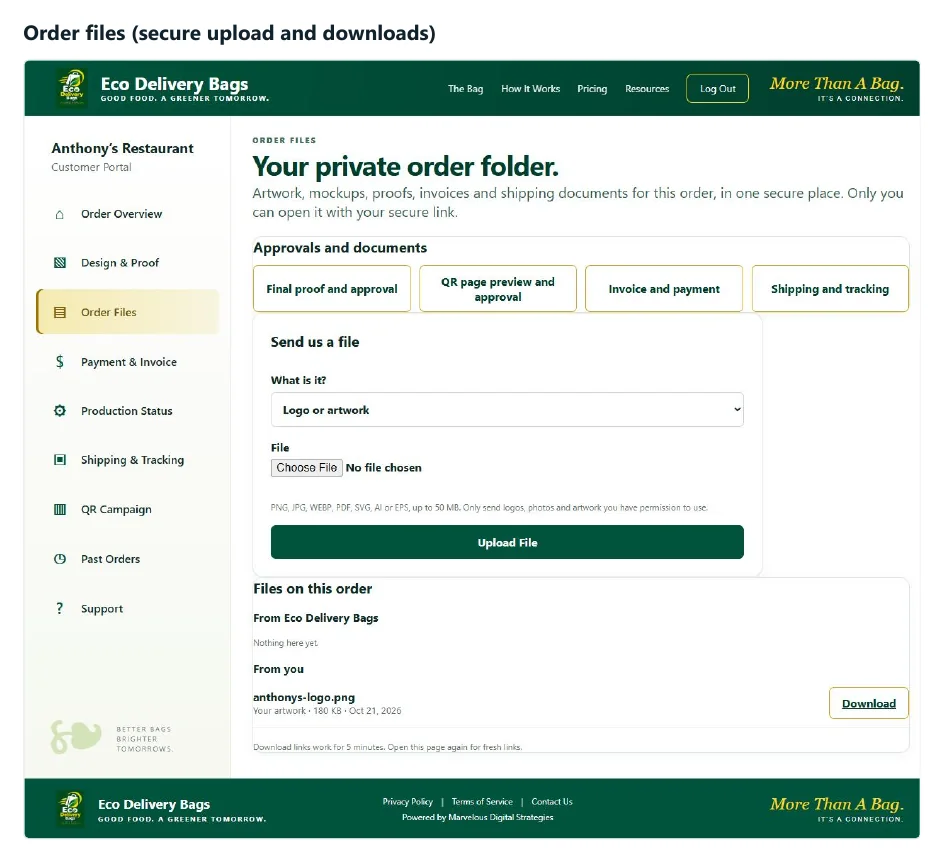
Artwork, mockups, proofs, invoices and shipping documents stay with the order.
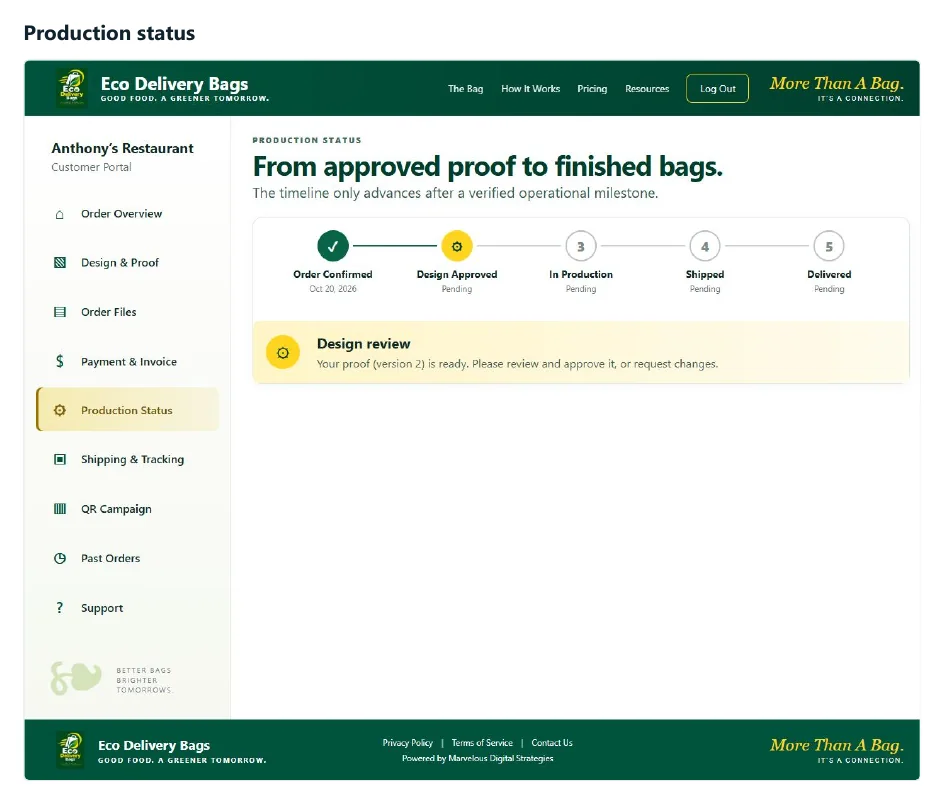
See the current verified milestone without guessing from elapsed time.
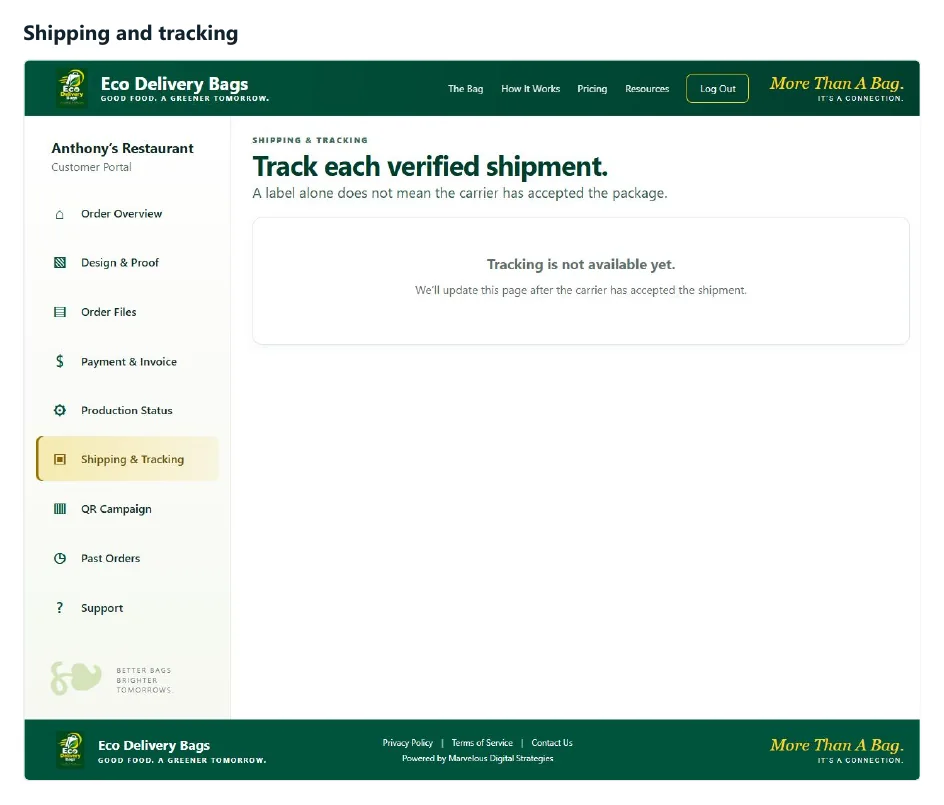
Carrier details appear when the shipment is confirmed.
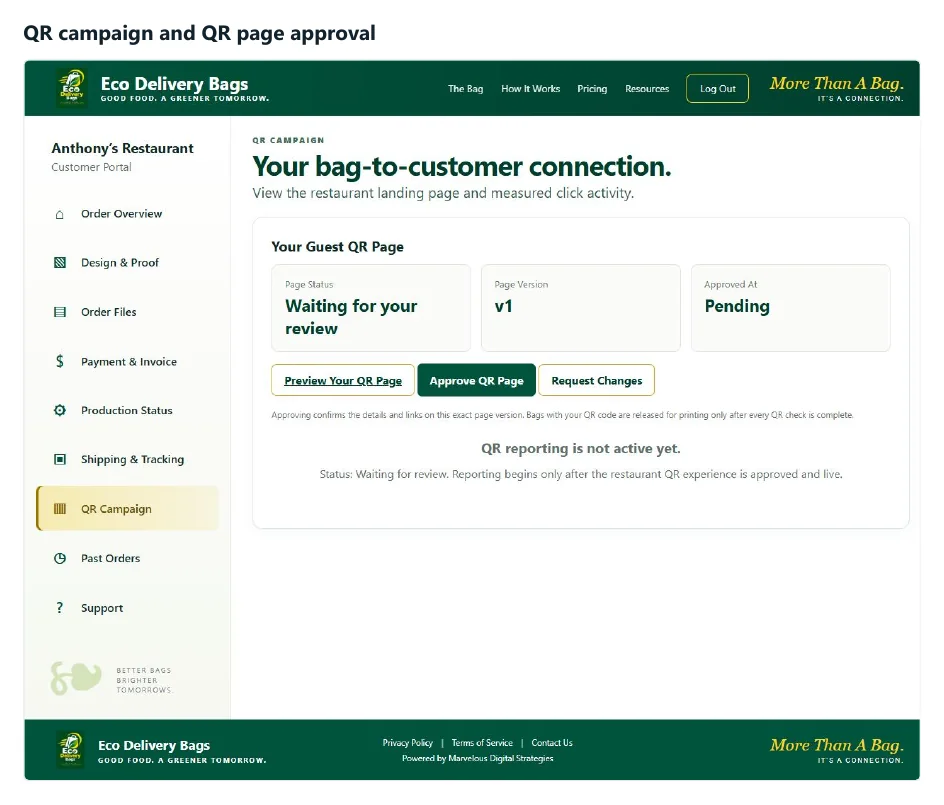
Preview the restaurant page, approve it or request changes before print.
Share the quantity, design goal and required date. We’ll help organize the right next step without taking payment on this website.
Design inspiration
Compare 25 concepts for logo treatment, food photography, menu hierarchy, brand story and QR placement—then use the strongest ideas as direction for your own proof.
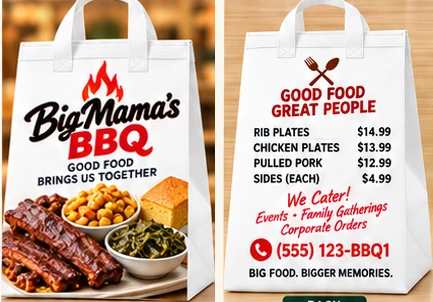
The purpose of the gallery is not to copy another restaurant. It is to identify the visual choices that fit your food, price point, personality and customer experience.
Do you want the bag to feel bold, premium, family-focused, food-forward, modern, traditional or highly promotional? That decision guides the layout better than adding more elements.
See how large logos, food-first imagery and cleaner premium layouts change the first impression.
Decide whether the back should feature a concise menu, signature dishes, story or ordering instructions.
Look for a position that is visible, scannable and separated from folds, seams and competing information.
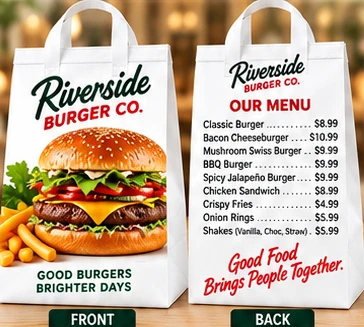
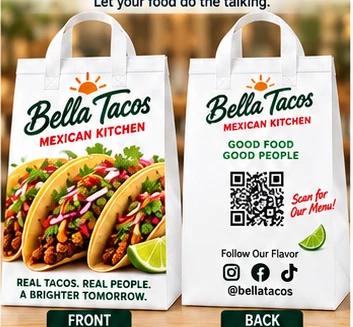
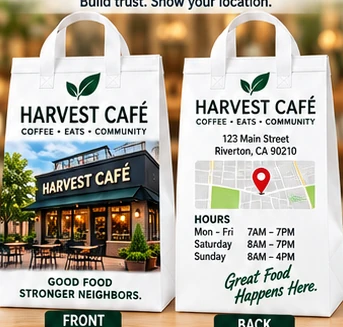
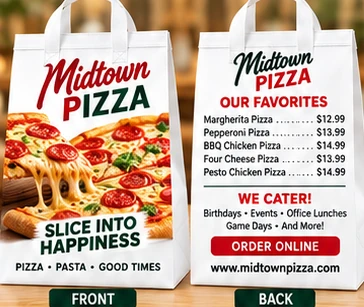
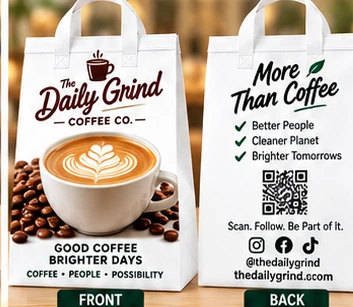
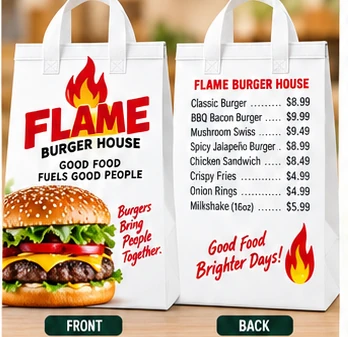
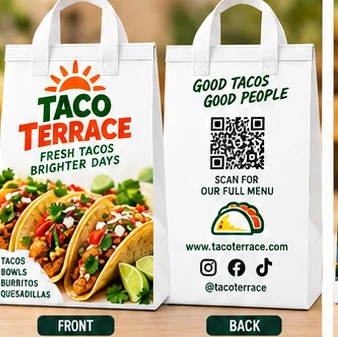
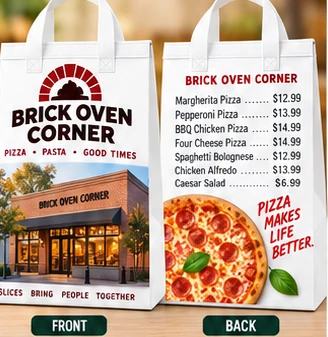
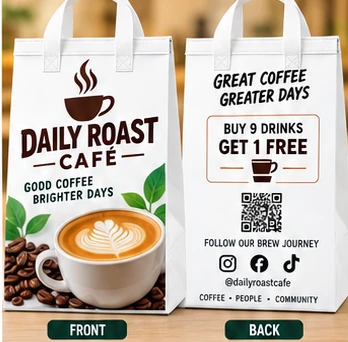
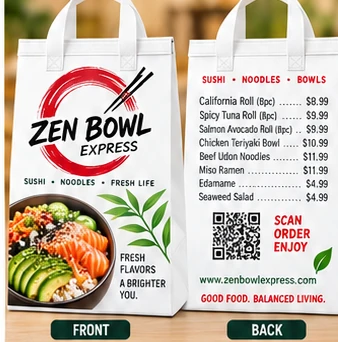
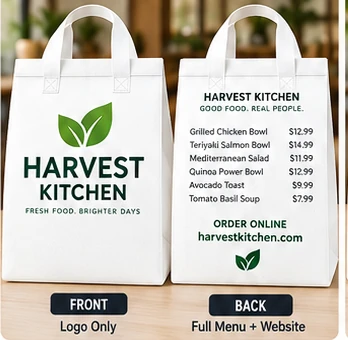
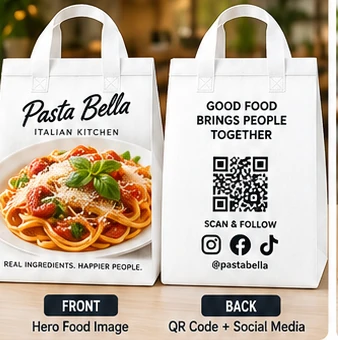
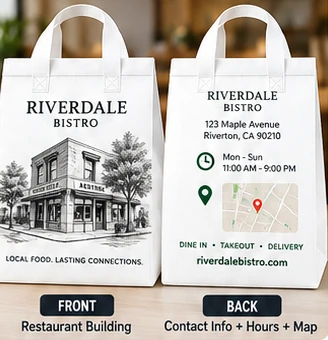
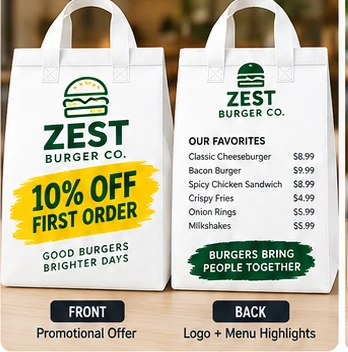
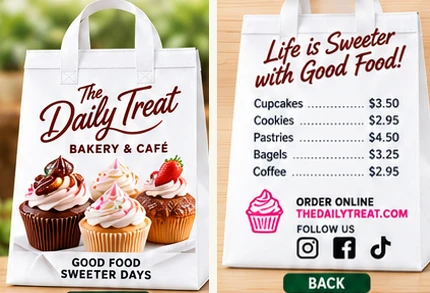
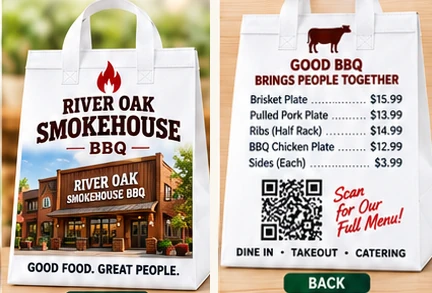
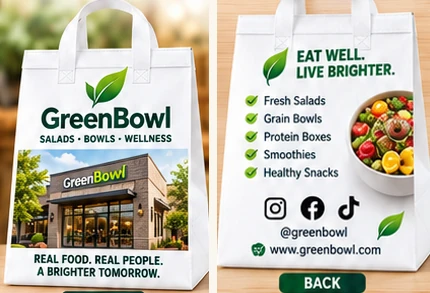
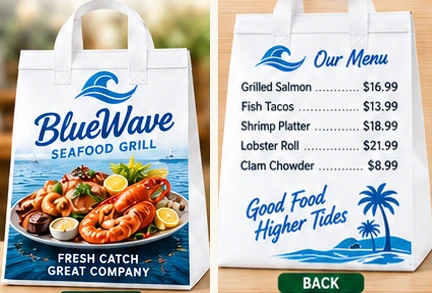
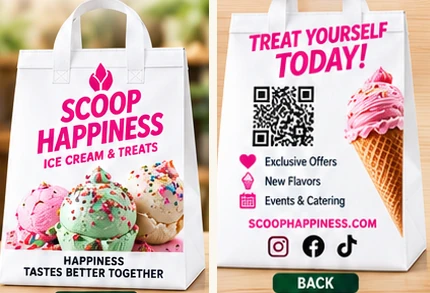
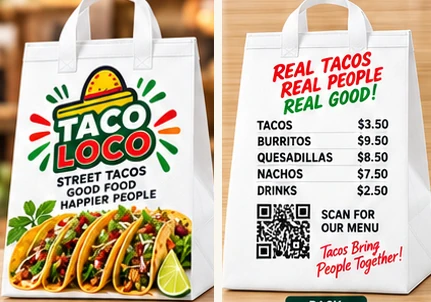
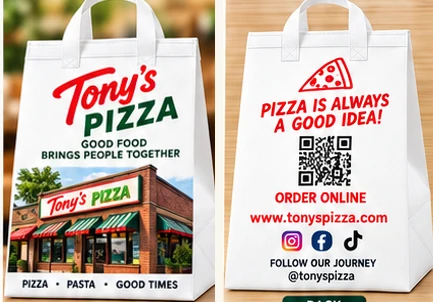
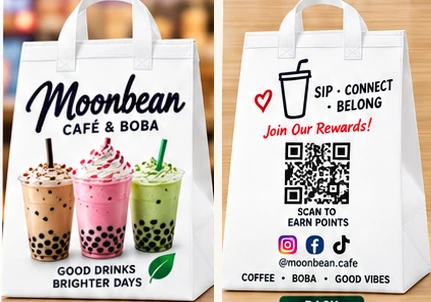
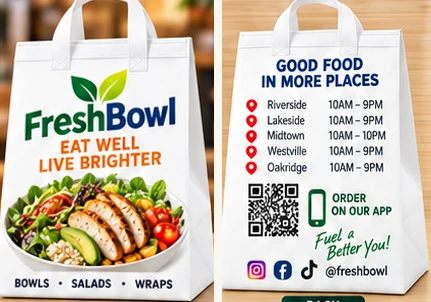
Concepts are examples of direction and layout. Final artwork must be approved for the real customer, product and print method.
Share the quantity, design goal and required date. We’ll help organize the right next step without taking payment on this website.
Creative direction
Bring the logo, menu, food photography, story and QR goal. We organize the message around the real bag instead of forcing artwork into unusable print areas.
Strong packaging design creates a clear order of attention. The customer should recognize the business first, understand the useful information next and know what action to take without searching.
A customer should not have to rotate the bag five times to understand the brand. Each panel should have one clear job, and the full set should feel like one campaign.
Lead with the logo, signature food or brand line that creates immediate recognition.
Use menu, featured items, ordering information or a focused customer story.
Use QR, phone, web, social and brand context without sacrificing readability around seams and folds.
The right design is not automatically the busiest design. The goal is to make the bag readable at pickup, useful after the order and recognizable from a distance.
Available for 200 and 500-bag runs when the artwork fits the production method. Use the front for immediate brand recognition and the back for menu, story, food images, ordering or QR information.
The 5,000-bag program uses the complete printable system: front, menu back, QR/contact side, brand-story side and printed base. The QR campaign, guest page and customer portal become part of the same order.
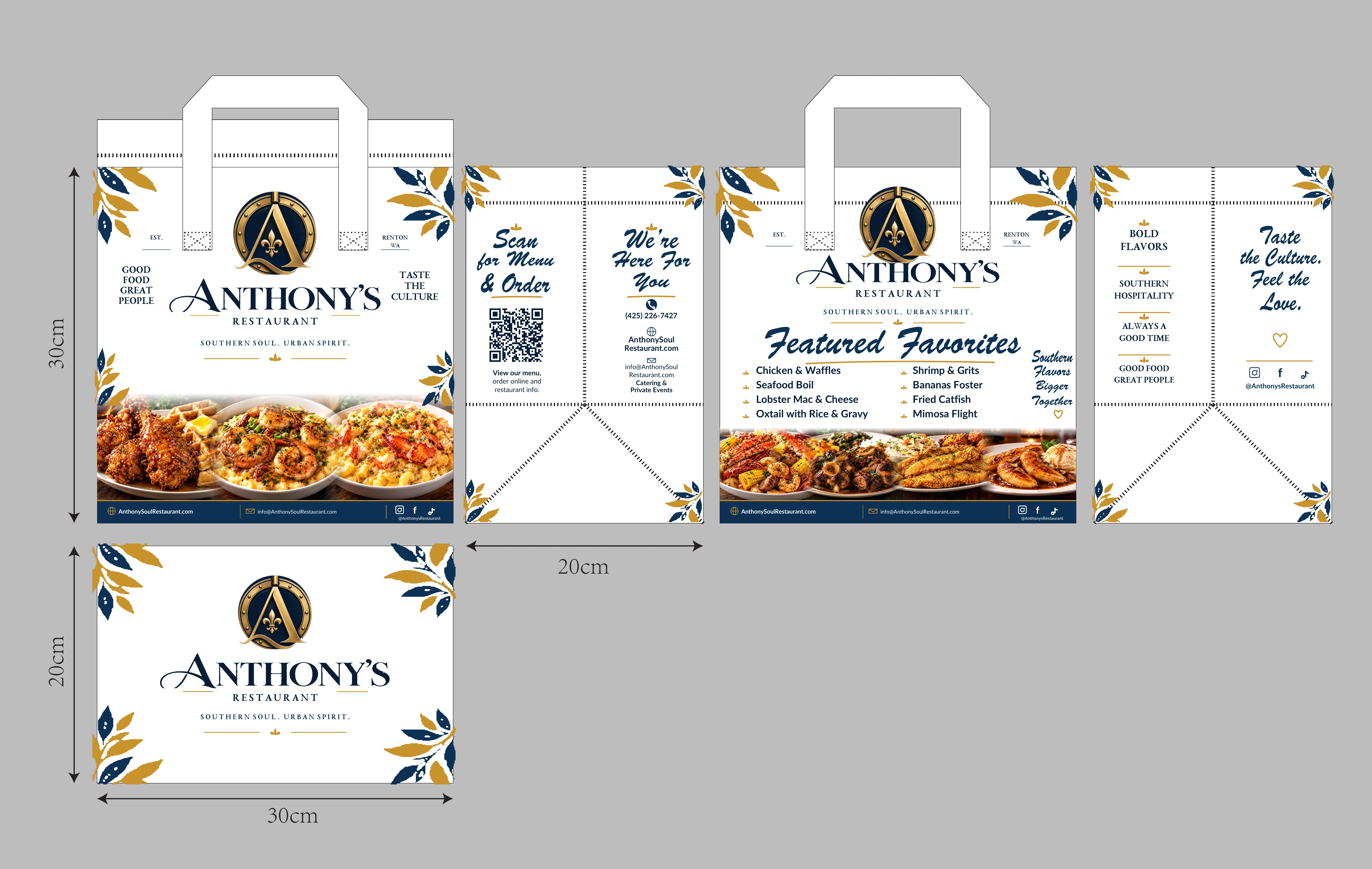
The first request does not need to be perfect, but these materials help move the design forward without repeated basic questions.
Logo, preferred colors, fonts, existing packaging or brand standards.
Signature dishes, menu copy, prices when appropriate and high-quality food photography.
Website, ordering link, phone, address, social links and QR goals.
Share the quantity, design goal and required date. We’ll help organize the right next step without taking payment on this website.
Frequently asked questions
Review the questions restaurants ask most often before requesting a sample, mockup, quotation or production proof.
A good FAQ should reduce uncertainty, not simply repeat sales claims. Use these answers to compare the product and process against your real operation.
Send the quantity, design goal and required date. The answer may depend on the final manufacturer, destination or artwork—not a generic website promise.
Review capacity, dimensions, insulation, printing and reuse.
Review color setup, sample shipping, deposit and final balance.
Compare the complete delivery windows and choose the service that fits the required arrival date.
The insulated delivery bags support up to 50 pounds (23 kg).
Yes. They are designed for repeated use, helping extend the visibility of the restaurant brand beyond a single delivery.
Yes. Custom printing may include logos, promotional artwork, QR codes, menus, food photography and more.
Printing color setup fees are one-time setup charges associated with creating the custom design. They are based on the number of printing colors.
The current fee schedule includes options for up to 10 colors. You do not need to choose the number before the design is created. The exact color count is confirmed after the artwork is approved, then added to the personalized checkout or invoice.
No. When the artwork, printing colors and bag dimensions remain unchanged, qualifying existing approved color setup can be reused.
Yes. Complimentary unprinted product samples are available. The customer is responsible for sample shipping.
Yes. Custom-branded samples may be requested. Applicable color setup and shipping fees are included in the quotation.
Your approved quote shows one total estimated delivery window from final artwork approval and order confirmation through delivery.
Current estimated total delivery windows are Economy 35–40 days, Standard 29–33 days, Faster 27–31 days and Express approximately 18–20 business days.
Economy Delivery is free and included with every 200, 500 and 5,000-bag order. Standard, Faster and Express delivery are available for an additional charge.
No. A 30% deposit begins production. The remaining 70% is due within the selected total delivery window and before shipment.
Yes. Repeat orders using unchanged artwork may reuse existing approved color setup without additional setup fees.
Yes. Current starting options include 200 bags, 500 bags and a 5,000-bag full custom campaign.
Yes. The design can use a clean logo treatment or a richer front/back concept with photography, menu information, QR or branded messaging when supported by the production method.
No. The website currently collects an order request. Final proof, written terms, payment setup and production authorization happen before manufacturing.
Yes. A permanent Eco campaign URL can route to an updated approved destination without changing the QR code printed on the bag.
No. The system may record scans and configured clicks, but does not label them as confirmed sales, calls or visits without a separate verified integration.
No. Anthony’s is a demonstration concept used to show the approved bag design and system.
Share the quantity, design goal and required date. We’ll help organize the right next step without taking payment on this website.
Industry solution
Carry the truck’s identity beyond the event, office stop or festival.
A mobile food business cannot rely on a permanent storefront. The bag can carry the schedule, ordering path and visual identity into the customer’s next conversation.
Start with real order volume, the customer handoff and the next action you want the bag to make easier.
Use QR and social information to help customers locate the next stop.
Bold, readable artwork can make the brand recognizable from a distance.
A reusable bag can continue showing the truck’s name after the original meal.
Food trucks compete in busy visual environments. Strong branded packaging helps the customer keep the ordering information, social handle and future schedule close.
A smaller run can validate the concept. A 5,000-bag campaign makes sense when the business has repeat volume and wants the complete QR/page system.
Test the artwork and customer reaction without beginning at the full campaign quantity.
Useful for a busier location or a more meaningful operational test.
All-panel artwork, permanent QR destination and a system designed for ongoing use.
Share the quantity, design goal and required date. We’ll help organize the right next step without taking payment on this website.
Industry solution
Give a delivery-first brand a stronger physical identity.
For a virtual restaurant, packaging may be the only physical environment the customer experiences. The bag has to create recognition, trust and a direct reorder path.
Start with real order volume, the customer handoff and the next action you want the bag to make easier.
Use the bag to replace some of the visual impact a storefront would normally provide.
Use a permanent QR destination for menu, ordering and location-specific links.
Give each virtual brand or location its own visual and QR campaign identity.
A ghost kitchen cannot rely on signage or dining-room atmosphere. The bag has to carry the brand story, trust signals and reorder path into the customer’s hands.
A smaller run can validate the concept. A 5,000-bag campaign makes sense when the business has repeat volume and wants the complete QR/page system.
Test the artwork and customer reaction without beginning at the full campaign quantity.
Useful for a busier location or a more meaningful operational test.
All-panel artwork, permanent QR destination and a system designed for ongoing use.
Share the quantity, design goal and required date. We’ll help organize the right next step without taking payment on this website.
How to order
Know what happens at every stage—free consultation, design, proof approval, exact color setup, personalized checkout, deposit, quality control, final payment, delivery and reorder.
You should not be asked to approve production before you understand the artwork, price, timeline and delivery choice. The process is designed to reduce surprises and keep each decision connected to the correct order.
The restaurant knows what is being approved. The production team knows exactly what can be manufactured. And the final proof becomes the shared reference before money and materials move.
Quantity, intended use, artwork direction and required arrival date shape the quote before the order is approved.
The final proof reflects the real bag, print zones, colors and QR destination.
Order status, final balance, delivery and reorder information stay connected to the same customer and design.
Tell us whether you are considering 200, 500 or 5,000 bags, plus the destination, deadline and business goal.
Provide the logo, photographs, menu, QR destination, preferred colors and other customization details.
Review the proposed bag artwork in the real printable areas. No print-color guess is required before this step.
Once the design is approved, the exact printing-color count and one-time color setup can be confirmed.
A personalized invoice, checkout or custom-order link includes the confirmed color setup fee, delivery and final terms.
The required deposit secures the approved order and authorizes custom manufacturing to begin.
The custom-branded bags move through the approved preparation, quality-assurance and packing process within the selected total delivery window.
The remaining 70% is paid before shipment, and the completed order continues through the selected total delivery window.
When the same approved artwork, colors and bag dimensions are reused, the existing approved color setup may be used again.
Share the quantity, design goal and required date. We’ll help organize the right next step without taking payment on this website.
Custom insulated food delivery bags for restaurants
How much of your takeout packaging disappears as soon as the meal is over? Eco Delivery Bags gives customers a strong insulated tote they can reuse—while your logo, menu, food photography and QR destination keep pointing back to your business.
Get a clear next step
Tell us what you want to improve—presentation, brand recognition, reorders, a QR destination or a multi-location program. We can help organize the quantity, artwork and delivery decisions from there.
Use 200 bags to validate the idea, 500 bags for a stronger operating test or 5,000 bags when you are ready for the complete all-panel campaign and permanent QR experience.
Coordinate every printable panel, the permanent QR destination and the private order experience.
Starting package prices are reviewed with the final color setup, destination and delivery service before production approval.
Review the physical product, one-time color setup, samples, payment stages and delivery choices before the order moves into production.
30 × 30 × 20 cm, 120 GSM woven material and aluminum foil thermal lining.
Product specifications →From $65.82 for one color. Qualifying unchanged reorders reuse the existing approved color setup.
Color setup fee schedule →Unprinted base samples are free; the customer pays sample shipping.
Sample options →Economy, Standard, Faster and Express total delivery windows.
Delivery times →Disposable packaging often disappears with the meal. A strong insulated tote can stay in the car, office, grocery routine or next pickup—giving the restaurant more opportunities to be recognized.
Every new design starts with a free consultation. Once the artwork is approved, the exact printing-color count, color setup, shipping and personalized checkout are confirmed before any production deposit is requested.
Share the quantity, brand materials, QR goal, destination and required date.
See the artwork on the actual front, back, side and base print areas that apply.
The approved design establishes the real printing colors and one-time color setup fee.
Your exact color setup, shipping and written terms are added to the correct invoice or checkout link.
Pay 30% to begin production, then the remaining 70% before the selected shipping route.
The full campaign connects a useful insulated tote with a permanent QR destination and a private customer order experience—so the brand, approval process and next action stay connected.
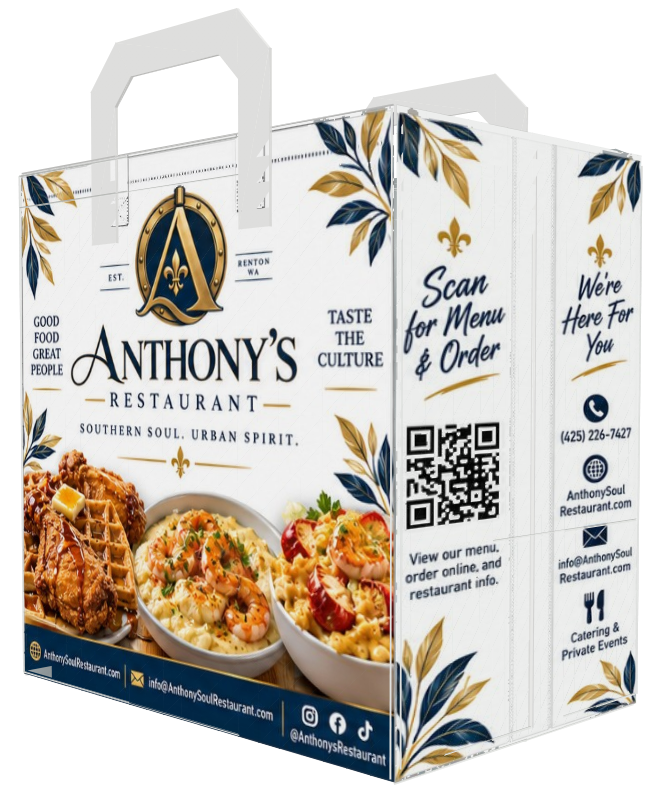
Protect the handoff, present the food professionally and give customers a tote they have a reason to reuse.
Explore the bag →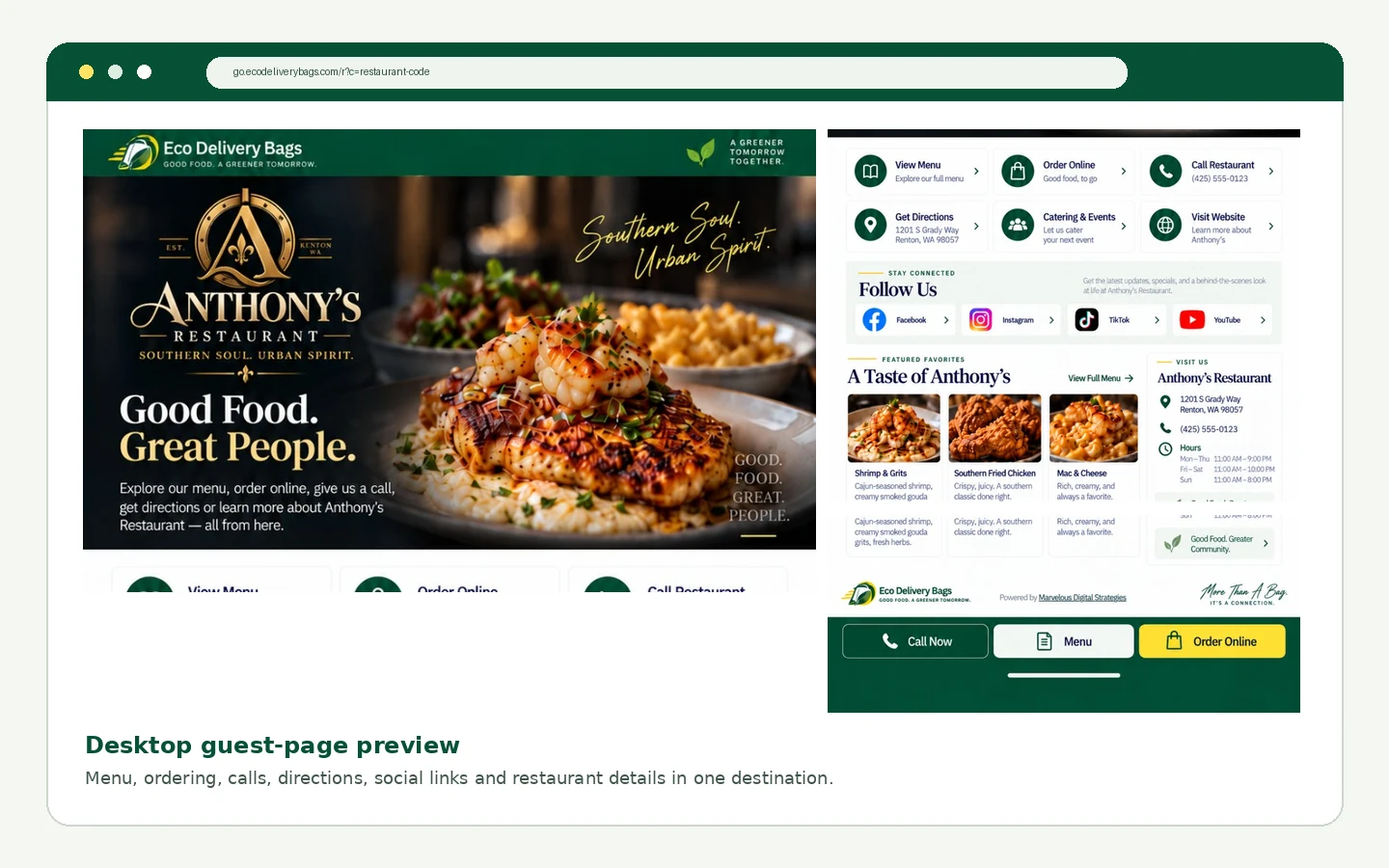
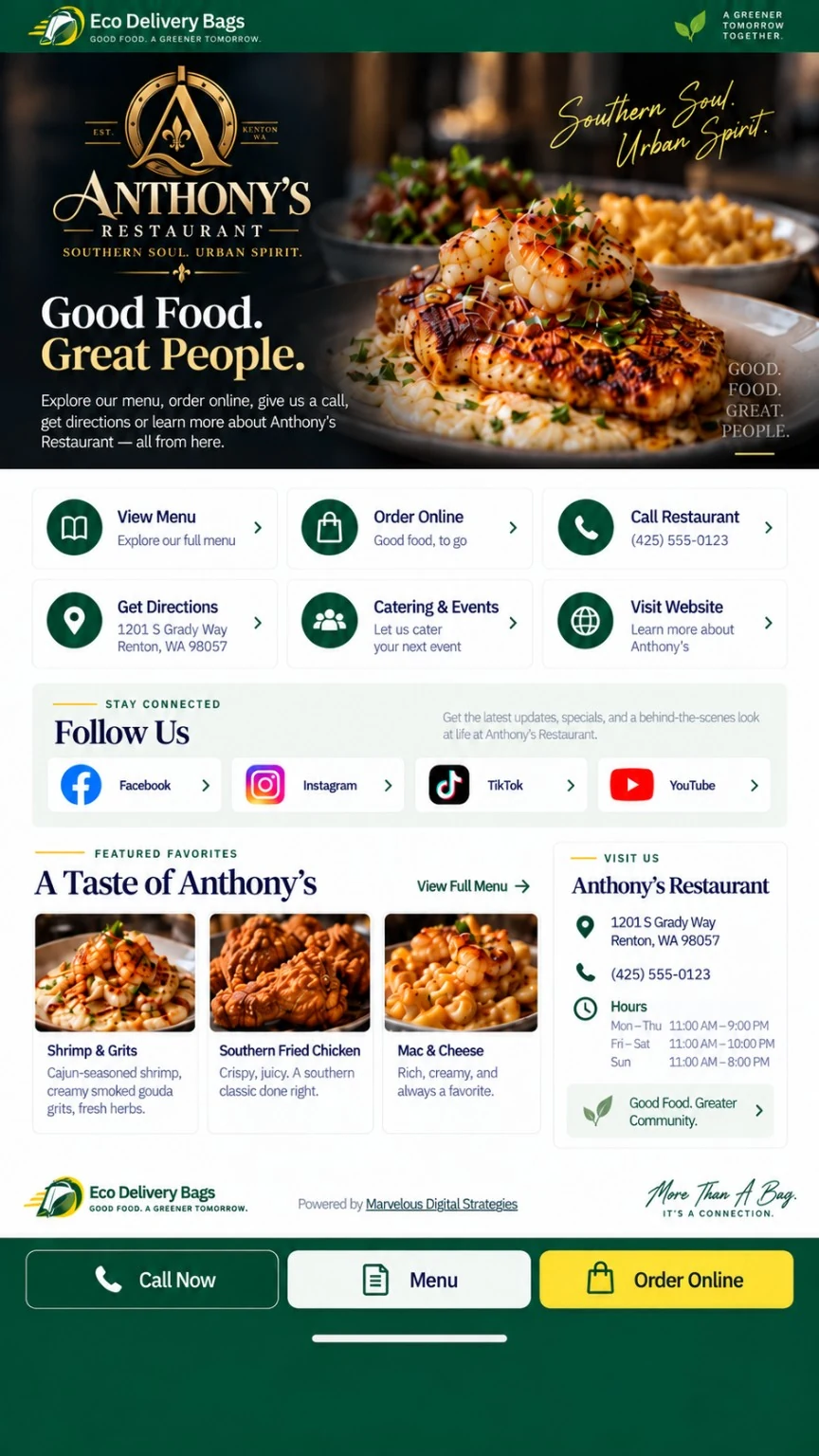
Make menu, ordering, calls, directions and social links easy to reach from one permanent printed code.
Explore the QR system →Keep proofs, approvals, files, payment, production and shipping connected to the correct order.
Explore the portal →Strong service should feel organized before a problem ever happens. Customers can see the current quote, review the exact proof, follow progress and open a support request without searching through disconnected messages.
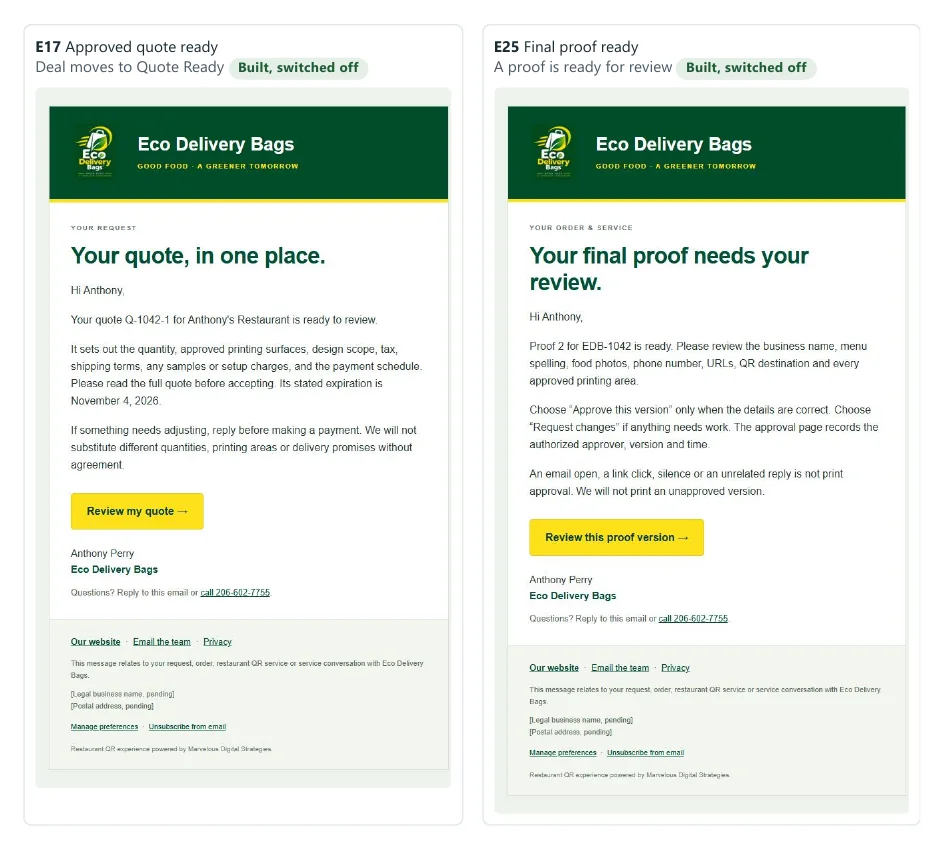
Branded emails direct the customer to the current quote or exact proof version, with a clear action instead of a vague update.
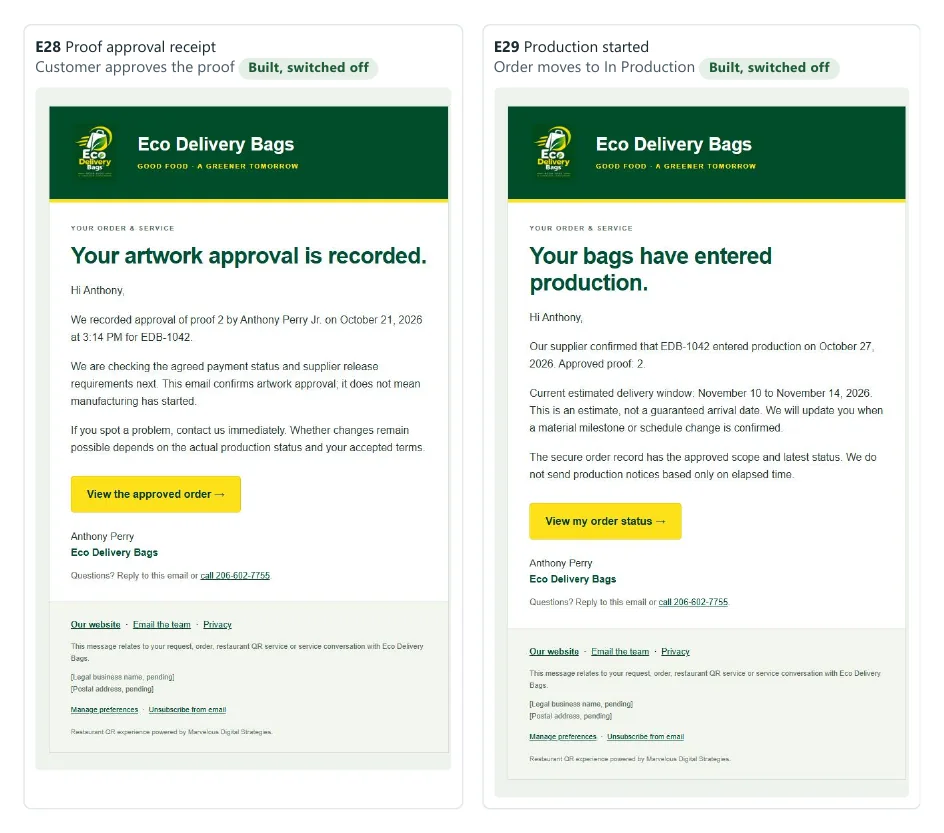
Approval receipts and milestone updates keep the customer, artwork and order reference connected.
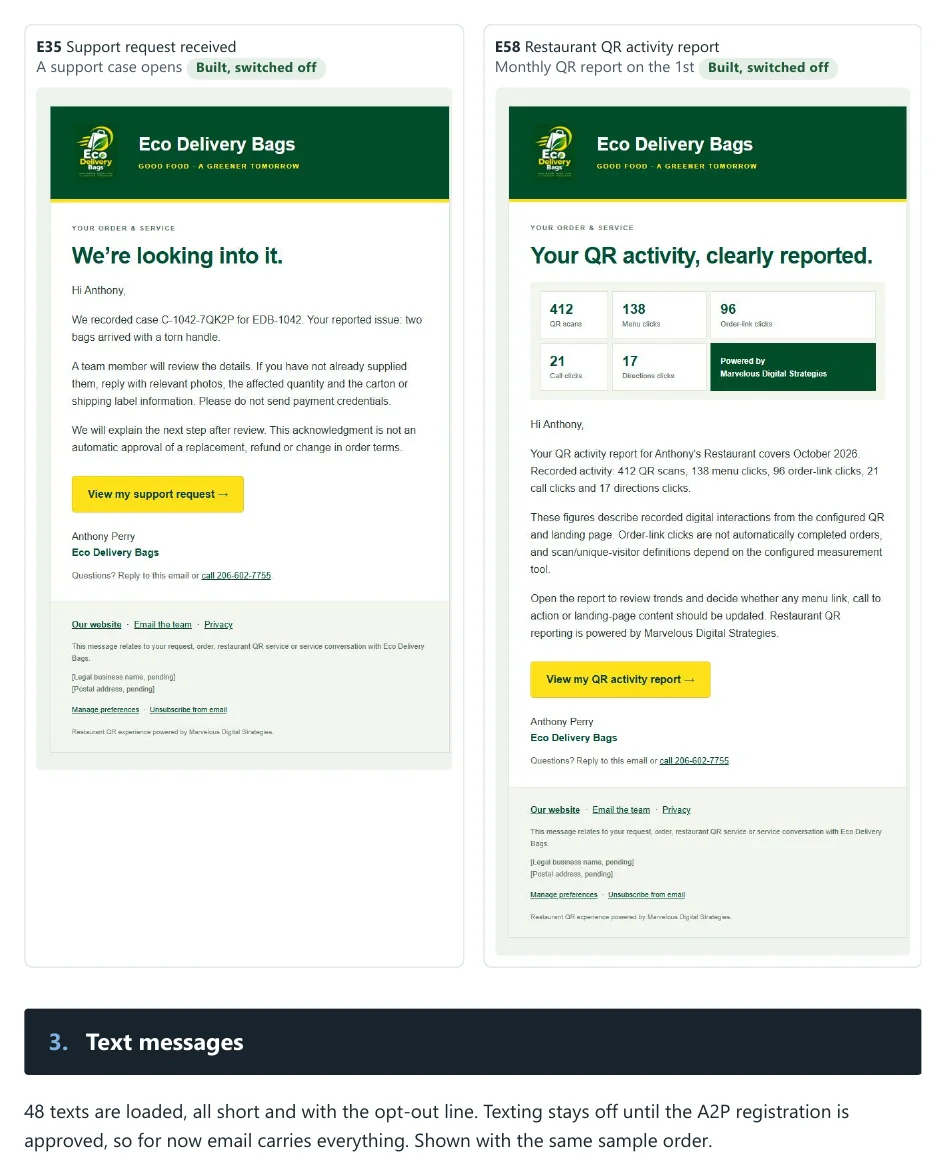
Support requests receive a case reference, while qualifying QR campaigns can receive clear scan-and-click reporting.
Sample order information is shown to demonstrate the planned customer experience.
A restaurant, food truck, caterer, ghost kitchen and meal-prep business may use the same tote differently. Start with the customer handoff and the action you want the bag to make easier.
Teriyaki, pho, Thai, Chinese, Indian, Mexican, Mediterranean, pizza, BBQ, burgers, chicken and more.
Restaurant solutions →Mobile branding for events, delivery runs, catering handoffs and repeat community exposure.
Mobile food solutions →Recurring delivery programs that need clean presentation, insulation and direct reordering paths.
Recurring delivery solutions →Tell us the quantity, required date and design direction. We’ll help organize the sample, proof, pricing and delivery decisions before production.
Industry solutions
Restaurants, food trucks, caterers, ghost kitchens, meal-prep brands and multi-location programs can use the same bag differently—because the customer journey is different.
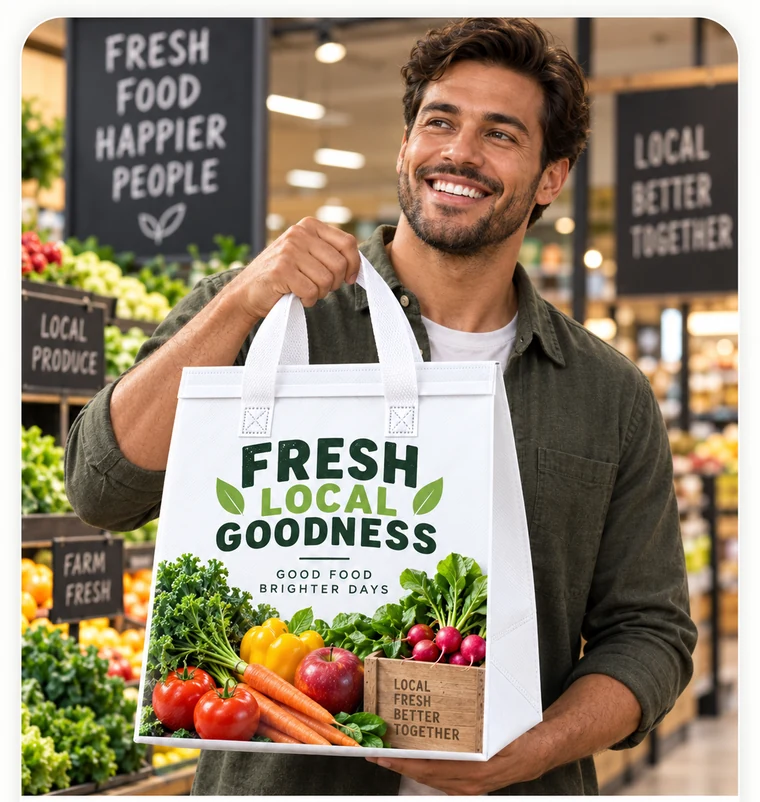
Some businesses need stronger presentation. Others need direct reordering, recurring visibility, location-specific QR tracking or a more organized bulk program. The best use case starts with the operational problem.
The useful plan comes from order volume, customer behavior, delivery method, brand style and the action the business wants the customer to take next.
Pickup, local delivery, catering, recurring meal prep and event service each create different packaging needs.
Design around reordering, menu discovery, booking, directions, social follow or brand recall.
Test with a smaller run or build a full campaign when the volume and system justify it.
Use these pages to compare the practical fit, recommended starting point, content strategy and customer journey for your business model.
Independent takeout-heavy restaurants across teriyaki, pho, Thai, Chinese, Indian, Mexican, Mediterranean, pizza, BBQ, burgers, chicken and more.
Explore restaurants →Mobile brands that need packaging to keep working after festivals, lunch service and community events.
Explore food trucks →Professional handoff for office meals, events, drop-off service and recurring corporate clients.
Explore catering →Delivery-first brands that need packaging to carry identity when customers never see the kitchen.
Explore ghost kitchens →Recurring customer delivery and pickup programs that benefit from insulation, reordering and routine visibility.
Explore meal prep →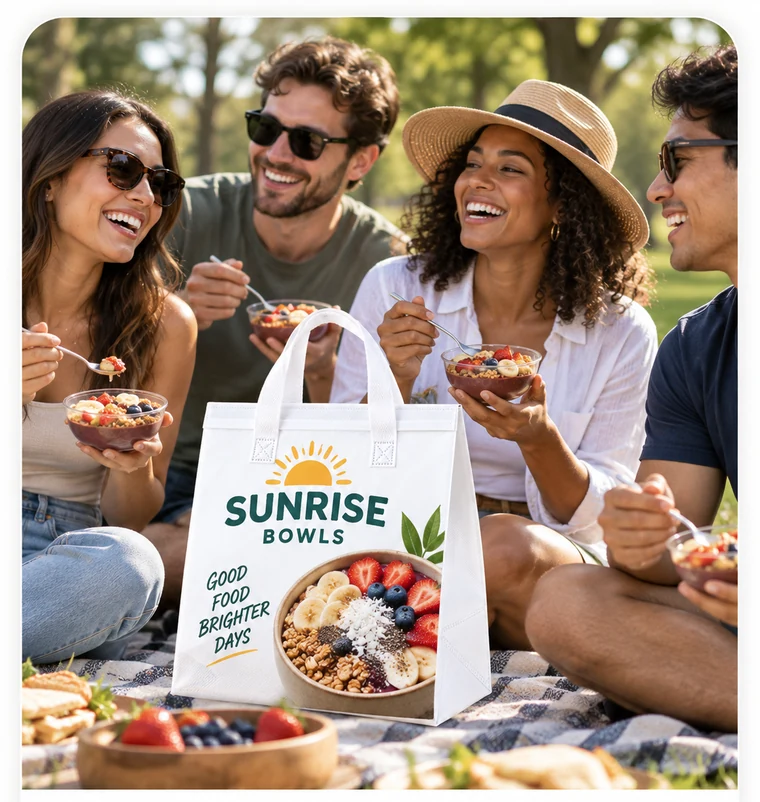
Larger programs that need consistent artwork, location-specific QR campaigns and repeatable ordering.
Explore wholesale & multi-location →Share the quantity, design goal and required date. We’ll help organize the right next step without taking payment on this website.
Industry solution
Support recurring pickup and delivery with a bag clients can reuse every week.
Meal-prep customers already repeat. A useful insulated bag can organize the handoff, carry care information and keep the reorder path visible between deliveries.
Start with real order volume, the customer handoff and the next action you want the bag to make easier.
Use a durable bag that can return to the car, office, gym or weekly pickup.
Add care, storage, schedule and QR information where the customer can find it.
Consistent branded presentation can make each recurring delivery feel connected.
Meal-prep programs have predictable repeat behavior. A useful insulated tote can become part of the service routine while keeping reordering and contact information visible.
A smaller run can validate the concept. A 5,000-bag campaign makes sense when the business has repeat volume and wants the complete QR/page system.
Test the artwork and customer reaction without beginning at the full campaign quantity.
Useful for a busier location or a more meaningful operational test.
All-panel artwork, permanent QR destination and a system designed for ongoing use.
Share the quantity, design goal and required date. We’ll help organize the right next step without taking payment on this website.
Design first. Exact checkout second.
Your exact printing-color count cannot be known until the artwork is complete. Start with a free consultation, approve the design, then receive the correct color setup fee, delivery charge and personalized checkout or invoice.
It cannot. That is why a new custom order begins with the design conversation—not a guess at the color setup fee. We first understand the quantity, branding, food photography, menu, QR goal and delivery needs. Then the approved artwork determines the exact production setup.
After you approve the artwork, we confirm the printing-color count, color setup, shipping choice and exact total. You then receive the correct secure checkout or invoice instead of trying to select a color setup fee blindly.
Share the quantity, business, brand materials, QR goal, destination and desired timeline.
See the artwork on the real printable panels before the order is priced for production.
We add the confirmed color setup and shipping to a personalized checkout, invoice or custom-order link.
Once the artwork is approved, the production requirements are known. That is when the correct color setup, shipping option, payment schedule and final written terms are attached to the order.
We confirm the quantity, branding, panels, QR goal, destination and timing.
The bag artwork is prepared in the actual printable areas for review.
The approved design establishes the exact printing-color count and color setup requirement.
A personalized checkout, invoice or custom link includes the confirmed color setup fee and delivery.
The approved deposit authorizes custom manufacturing to begin.
The remaining 70% is paid before shipment, and the order continues through the selected delivery service.
Start with the free consultation. Approve the design first, then receive the exact color setup fee, shipping and secure purchase path.
Pricing & custom printing
Compare the 200, 500 and 5,000-bag paths, one-time color setup, delivery options and 30%/70% payment structure before approving production.
The smallest quantity is not always the best value, and the largest run is not always the right first step. The useful question is what quantity gives your business enough real customer handoffs to evaluate the idea.
Use 200 to validate, 500 to create a stronger operating test, or 5,000 when the business is ready for a complete all-panel campaign and permanent QR experience.
Package price, color setup and paid shipping upgrades are reviewed before production approval.
The planned structure is 30% after order and artwork approval, then 70% after manufacturing before shipment.
When approved artwork, colors and dimensions stay unchanged, qualifying approved color setup can be reused without another setup fee.
Starting package prices are reviewed with the final artwork, color setup, destination and delivery service before the order is approved.
Print color setup fees apply when a new custom design requires new approved color setup. Once the approved color setup are created, they can be reused for qualifying future orders using the same approved artwork, colors and bag dimensions.
| Printing colors | One-time setup fee |
|---|---|
| 1 color | $65.82 |
| 2 colors | $131.65 |
| 3 colors | $197.47 |
| 4 colors | $263.30 |
| 5 colors | $329.12 |
| 6 colors | $394.94 |
| 7 colors | $460.77 |
| 8 colors | $526.59 |
| 9 colors | $592.42 |
| 10 colors | $658.24 |
Due after the order details and custom artwork are approved. This secures the order and authorizes custom manufacturing to begin.
Due after manufacturing is completed and before the finished order ships.
| Order confirmation and production deposit | 30% |
|---|---|
| Production completed, before shipment | 70% |
| Total | 100% |
Your final quotation includes applicable color setup fees, shipping charges and selected customization options.
Share the quantity, design goal and required date. We’ll help organize the right next step without taking payment on this website.
Your bag-to-customer connection
The customer already has the bag in hand. A permanent QR code can make the next step effortless—view the menu, order online, call, get directions, follow the restaurant or return later without searching.
The strongest QR experience does not send people to a random homepage. It gives them the exact actions they are most likely to need after seeing or reusing the bag.
Update an approved menu, ordering link, campaign or location detail without replacing the QR printed on the bags.
Put the menu and online ordering within one scan of the physical bag.
Call, directions, catering, social and website links can live in one branded destination.
See recorded scans and configured button clicks by restaurant location.
The QR system turns reusable packaging into a measurable, updateable customer touchpoint—without pretending that every click is automatically a sale.
Send customers to the exact ordering destination instead of making them search for the restaurant again.
Give dine-in, pickup, catering and delivery customers a fast way to view current menu information.
Make calling and directions easy when the bag is reused at work, in the car or around the neighborhood.
Connect to the restaurant’s website and social channels instead of relying only on a third-party marketplace.
Each restaurant location receives its own permanent campaign code so the reporting stays organized.
Monthly reporting can summarize scans and useful actions while keeping the language honest and understandable.
Customers reach a branded page with the restaurant’s approved actions. Tap either preview to inspect the details at full size.
Menu, ordering, contact, location, social and featured items stay organized in one branded experience.
Large, clear actions help the customer move from the physical bag to the next useful step.
Every qualifying location receives its own QR campaign, print-ready image, approved guest page and reporting record.
Assign a unique permanent code to the correct restaurant location.
Connect the approved menu, ordering, phone, directions, website and social links.
Use the print-ready SVG or large PNG that belongs to that exact campaign.
Scan the final artwork, verify the correct page and confirm the test event is recorded.
The customer approves the page before print and receives reporting after the campaign is active.
The QR experience stays tied to the correct order, location and approved page—not buried in a chain of unrelated links.
The restaurant can verify its menu, ordering, phone and directions links before the code is authorized for print.
Recorded scans and configured clicks are reported clearly. A click is never mislabeled as a completed sale or visit.
The release check protects the restaurant from a wrong location, broken destination or untested code.
Tell us the location, menu, ordering and contact goals. We’ll organize the QR destination with the bag design before the order is released.
Industry solution
Every takeout handoff is a chance to protect the meal and strengthen the brand.
Restaurant takeout is repetitive. That repetition can either create disposable packaging waste or build consistent recognition with a bag customers choose to keep.
Start with real order volume, the customer handoff and the next action you want the bag to make easier.
A clean insulated handoff can elevate the presentation before the food is opened.
Use menu, phone, website and QR to reduce the distance between a good meal and the next order.
Repeated reuse gives the logo and signature food more chances to be seen.
Independent restaurants often rely on third-party delivery, repeat pickup and neighborhood recognition. A reusable bag creates a physical reminder that does not depend on another app’s interface.
A smaller run can validate the concept. A 5,000-bag campaign makes sense when the business has repeat volume and wants the complete QR/page system.
Test the artwork and customer reaction without beginning at the full campaign quantity.
Useful for a busier location or a more meaningful operational test.
All-panel artwork, permanent QR destination and a system designed for ongoing use.
Share the quantity, design goal and required date. We’ll help organize the right next step without taking payment on this website.
Product samples & proofs
Use a complimentary unprinted sample, a custom-branded sample or a digital proof to reduce uncertainty before the larger production run.
A sample answers construction questions. A proof answers artwork questions. Together they help the business evaluate the product and the design before the full run begins.
The sample lets you inspect material, size, insulation and seams. The proof lets you inspect layout, readability, colors, QR placement and print zones.
Complimentary unprinted samples help you assess construction, handles, capacity and insulation; the customer pays sample shipping.
Custom-branded samples may be available with applicable color setup and shipping charges.
The final proof documents the exact artwork, panels and QR destination that should be released to manufacturing.
The base sample is free. Customers are responsible only for the applicable sample shipping charge.
Evaluate the woven exterior, handles, seams, opening and everyday build quality.
Inspect the aluminum foil insulated interior and how the bag opens and closes.
Review the 30 × 30 × 20 cm dimensions and practical carrying capacity for your menu.
Businesses interested in a printed sample may request custom-branded sample options.
After the free design consultation, the artwork is prepared inside the real printable areas. The customer reviews and approves the proposed design first. Only then is the exact printing-color count, one-time color setup, QR placement, delivery and personalized checkout confirmed before the deposit is requested.
Logo, photos, menu, links, QR destination and preferred colors.
Check the overall presentation, print zones and information accuracy.
Approve the final design and written order specifications before production.
Share the quantity, design goal and required date. We’ll help organize the right next step without taking payment on this website.
Clear door-to-door timing
You should not have to calculate separate preparation, inspection, packing and carrier clocks. After your final artwork, written order and required deposit are approved, your quote shows one total estimated window to your confirmed delivery address.
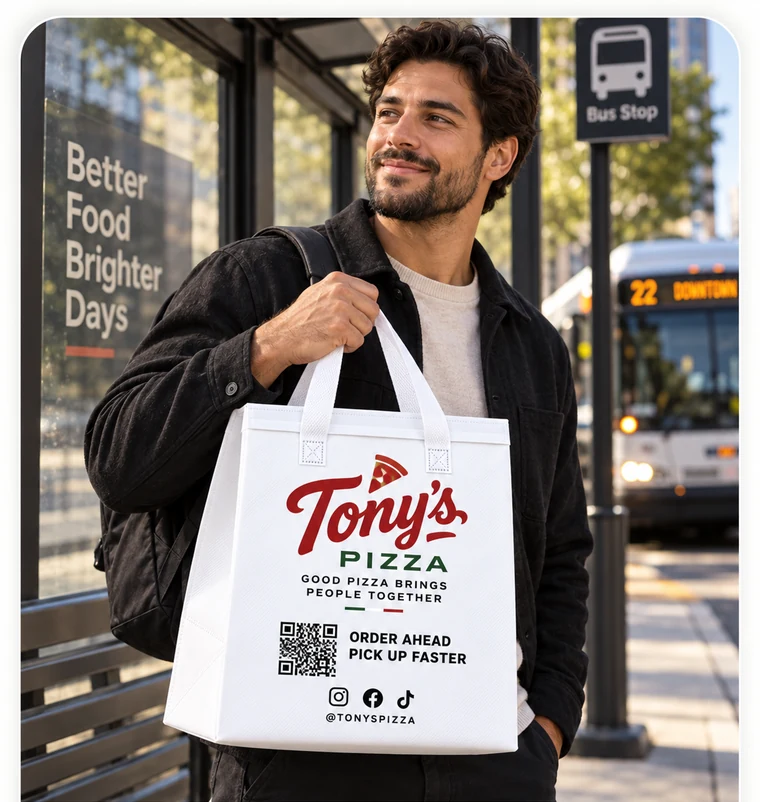
Start with the date your business needs the order in hand. Then choose the total delivery window that protects the event, promotion, opening or inventory plan without paying for speed you do not need.
Each window includes the work required to prepare, inspect, package and transport the completed order.
Compare the complete window—not just one part of the process.
Every 200, 500 and 5,000-bag order can use the longest window with delivery included at no charge.
Standard, Faster and Express options are quoted from the real order and destination.
These are estimated order-to-delivery windows beginning after final artwork approval, written order confirmation and the required deposit. The confirmed quote gives the working date range for the actual order.
The value-first choice when your restaurant has time to plan ahead.
A balanced choice when timing matters but Express speed is unnecessary.
Useful for a closer deadline, opening, promotion or inventory need.
The fastest available path, priced from the actual destination and packed shipment.
All dates are planning estimates, not guarantees. The final window can be affected by the approved design, order quantity, destination, holidays, carrier availability, address accuracy and unexpected transportation conditions.
Use the date you expect to approve the final artwork and written order. The calculator applies the complete delivery window you select.
Fast approvals and complete information reduce avoidable delays. We keep the customer-facing promise focused on the total estimated arrival window.
Names, spelling, phone numbers, links, QR destinations and print colors should be correct before the order is released.
A complete business address and the correct recipient help prevent avoidable carrier delays.
If the bags support an opening or event, share the required date during the consultation so the right option can be quoted.
Tell us the quantity, destination and required date. We’ll match the request to the most practical delivery window before you approve the order.
Website directory
Find the product, pricing, design, QR, shipping, industry and educational page that answers the question you have now.
Use the directory to move directly to the product detail, ordering step or industry use case that matches your decision.
Read the detail you need, then return to the order request or contact form when the business is ready.
Review construction, strength, samples and printable areas.
Review pricing, color setup, payment stages and delivery timing.
Review design services, QR destinations, portal and industry examples.
Tamper-evident delivery bags
Every Eco Delivery Bag closes with a one-time peel-and-seal adhesive flap. The order is sealed at your counter, the foil-lined tote holds the heat in, and your customer opens the bag knowing it has not been opened for them. Your brand is printed right on it.
Between your kitchen and the customer’s door, the order passes through other hands and sits on other seats. The customer cannot see any of it. All they can judge is the package that arrives, and an open or unsealed bag raises a question the food has to overcome before the first bite.
An intact seal says the order left your counter closed and arrived the same way. That feeling of safety is part of the meal, and it is yours to deliver.
They see for themselves that the bag was sealed when it left your restaurant.
A closed, foil-lined bag holds heat in better than an open one.
A sealed handoff gives staff a clear routine and customers a clear signal.
The closure is built into the bag, so there is no separate sticker to stock or lose, and the step fits into the handoff your staff already does.
Pack the closed food containers, check the order against the ticket, then peel the liner off the adhesive strip. The strip is ready only once, which is the whole point.
Fold the adhesive flap over the flat-mouth opening so the foil-lined interior is fully covered and the heat has nowhere to escape.
Press the flap shut along its full length. The sealed bag goes to the driver or the guest, and the customer can see at a glance that nothing has been opened since.
The closing sequence is shown in the interactive 3D viewer on the home page, and your production proof shows the same peel-away liner and fold-over adhesive flap.
Customers rarely say that a sealed bag made the meal better. They notice when it is missing. Giving them the sealed bag removes the doubt.
The seal is the first thing the customer sees. An intact seal tells them the order was closed at the restaurant and stayed closed on the way.
A foil-lined tote with the opening held shut keeps the heat inside instead of letting it escape on every red light and every flight of stairs.
The seal is single-use, but the tote is not. Customers keep the 50-pound woven bag for groceries, lunches and errands, and your brand goes with it.
The seal protects the guest experience, and it protects the restaurant’s reputation along with it.
When the seal is intact, the question answers itself. When it is not, the customer knows to say so, and you hear about it early instead of in a bad review.
Many orders still go out in a thin paper bag. A sealed, branded, insulated tote looks and feels like a different kind of restaurant.
Close the containers, check the order, peel, fold, press. One consistent routine is easier to train and easier to trust.
Your logo, menu and QR code are printed on a bag customers reuse, so the same product that protects the order keeps promoting your restaurant.
One bag does all three jobs, and the closure is built into the tote, so there is no separate sticker to stock or lose.
A delivery has three handoffs. The seal does its work at every one of them.
Staff close the order, peel the liner and press the flap shut. The bag leaves your hands sealed and checked, which is the last moment you control.
The driver carries a closed, foil-lined bag with the heat held inside. A sealed flap is also a quiet reminder that nobody on the route needs to open it.
The customer checks the seal, breaks it themselves and opens an order that was theirs alone. The first impression of your restaurant is a trusted one.
The seal is gone, but the tote stays. Your logo, menu and QR code ride along on every errand, so one delivery keeps producing impressions long after the food is eaten.
A tamper-evident closure and a custom print are two halves of the same promise: this order came from us, and it arrived the way we sent it.
Your logo and brand line sit where the customer looks first, directly above the sealed closure.
Use a printed QR code for your menu, reorders or reviews. The printed code stays the same while the destination behind it can be updated without reprinting.
QR system →Menu highlights, ordering details or your brand story reward the customer for keeping the bag.
Design gallery →It is tamper-evident, not tamper-proof. The seal makes opening visible. It does not stop a determined person from opening a bag, and we never describe it as a guarantee.
It does not replace food-safe handling. Keep food in suitable closed containers, pack it upright and follow safe time and temperature practice. No food-safety certification or delivery-platform endorsement is claimed.
It is single-use. The adhesive closure is a one-time seal and not a reusable security seal. After it is opened, the tote is a durable reusable bag, and bags with damaged handles, seams or lining should be retired.
The seal works best when every order gets the same handoff. Print this and post it by the pass.
Anywhere food leaves your hands and reaches someone else’s, the seal has a job to do.
Dine-in turned takeout, third-party apps and your own online ordering all get the same trusted, sealed handoff.
Restaurant bags →With no storefront, the bag is your brand. A sealed, printed tote builds trust for a name customers never see in person.
Ghost kitchen bags →Multi-meal orders and weekly boxes travel farther and sit longer, which makes a sealed, insulated bag worth even more.
Catering bags →Straight answers, including the limits of what a tamper-evident seal can do.
It means the closure shows whether the bag has been opened. Eco Delivery Bags close with a one-time peel-and-seal adhesive flap, so a customer can see at the door whether the seal is still intact.
No. Tamper-evident is not tamper-proof. The seal does not stop anyone from opening a bag; it makes opening visible. That is why we describe it as evidence and never as a guarantee.
It helps. The foil thermal lining works best with the opening closed, and the seal keeps the flap shut for the whole trip. Food still needs suitable closed containers and safe time and temperature handling.
Yes. The seal is single-use, but the 120 GSM woven tote with its foil lining and 50-pound (23 kg) rating is built to be kept and reused for groceries, lunches and errands.
Yes. The approved bag design closes with a peel-away liner and a fold-over adhesive flap, and you can see the closing sequence in the interactive 3D viewer before you approve a proof.
Tell us your quantity, design goal and required date. We will show you the sealed bag on a production proof and help you pick the right starting run without taking payment on this website.
Product confidence
See why load capacity, handles, seams and construction matter when the bag is expected to survive real restaurant use and be reused later.
Brand visibility only lasts if the product remains useful. Strength, comfort and construction protect the meal, the customer experience and the chance of future reuse.
A bag that performs well is more likely to stay in circulation—and every additional use creates another opportunity for the restaurant to be seen.
The 23 kg specification and internal 50-pound demonstration show the bag is intended for more than a light single item.
Construction and seam placement matter because the customer feels the load through the handles first.
A reliable tote is more likely to be reused for groceries, work, car storage or the next pickup.
The supplier specification has been discussed at approximately 23 kg, and an internal demonstration used roughly 50 lb. That supports the intended reusable-tote positioning, but each production run still depends on the final manufacturer, sample and quality control.
A sample and production inspection should look at the whole product rather than relying on one impressive number.
Attachment, comfort, symmetry and load distribution.
Construction integrity, clean alignment and usable gussets.
Artwork clarity, color, foil lining, opening and overall finish.
Share the quantity, design goal and required date. We’ll help organize the right next step without taking payment on this website.
Industry solution
Standardize the brand while giving each location the right order and QR identity.
Larger programs need more than a low unit price. They need controlled artwork, location mapping, repeat ordering and shipping decisions that do not create confusion as volume grows.
Start with real order volume, the customer handoff and the next action you want the bag to make easier.
Use approved artwork rules and reusable approved color setup for repeat production.
Separate campaign codes, destinations and order records by location.
Preserve the approved design, production details and shipping history for the next run.
Larger programs need clear ownership of artwork, location data, QR campaigns, shipping, reorders and changes. The goal is one repeatable process with location-specific control.
A smaller run can validate the concept. A 5,000-bag campaign makes sense when the business has repeat volume and wants the complete QR/page system.
Test the artwork and customer reaction without beginning at the full campaign quantity.
Useful for a busier location or a more meaningful operational test.
All-panel artwork, permanent QR destination and a system designed for ongoing use.
Share the quantity, design goal and required date. We’ll help organize the right next step without taking payment on this website.
Eco Delivery Bags guide
A responsible timeline starts after the order, artwork and deposit are approved. Manufacturing and shipping are separate stages, and both should be visible in the plan.
A responsible timeline starts after the order, artwork and deposit are approved. Manufacturing and shipping are separate stages, and both should be visible in the plan.
Final production, pricing and delivery details still depend on the approved artwork, manufacturer, destination and selected service.
Understand why construction, print area or QR architecture matters to the customer experience.
Evaluate quantity, timeline and cost alongside the expected use—not as isolated numbers.
Use the guide to identify the quantity, assets and questions that should go into the next conversation.
Practical takeaway: the best custom bag decision connects the physical product, the artwork, the proof, the shipping plan and the next customer action.
Production cannot be measured honestly from the day someone first asks for a quote. It begins after the artwork, quantity, order terms and required release conditions are complete.
A production estimate expressed in working days excludes weekends and may exclude holidays. That is why production and transit dates should be calculated and displayed separately.
The standard path generally gives the customer the best landed price, but it requires planning time. Current planning allows up to 30 additional days within the selected total delivery window.
Expedited shipping can be faster, but cost and timing depend on packed carton dimensions, destination and available carrier routes. A useful website tells the customer that instead of inventing a guaranteed date.
Share the quantity, design goal and required date. We’ll help organize the right next step without taking payment on this website.
Eco Delivery Bags guide
The answer is not one feature. It is the relationship between the food handoff, product construction, artwork, order volume, delivery plan and the customer’s reason to reuse it.
The answer is not one feature. It is the relationship between the food handoff, product construction, artwork, order volume, delivery plan and the customer’s reason to reuse it.
Final production, pricing and delivery details still depend on the approved artwork, manufacturer, destination and selected service.
Understand why construction, print area or QR architecture matters to the customer experience.
Evaluate quantity, timeline and cost alongside the expected use—not as isolated numbers.
Use the guide to identify the quantity, assets and questions that should go into the next conversation.
Practical takeaway: the best custom bag decision connects the physical product, the artwork, the proof, the shipping plan and the next customer action.
A useful custom bag begins with the actual order: container sizes, number of meals, hot or cold use, pickup versus delivery, and how customers carry the food. A beautiful design on the wrong size or structure is still the wrong bag.
A 200-bag trial can validate the concept. A 500-bag run creates a more meaningful operating test. A 5,000-bag campaign makes sense when the business has dependable volume and wants the complete all-panel and QR system.
A digital mockup shows direction. A physical sample proves material and construction. A final production proof identifies the exact artwork and order that will be manufactured. Keep those three reviews separate.
Production time begins after the final approval gate. Transit begins after the goods are packed and released. Separating the two makes the estimate more honest and helps the restaurant understand what can still change.
The printed QR should point to a permanent campaign URL controlled by the restaurant’s system—not directly to a temporary menu or third-party link. That preserves the option to improve the destination later.
Share the quantity, design goal and required date. We’ll help organize the right next step without taking payment on this website.
Eco Delivery Bags guide
The bag can carry the brand, contact path and next-order action into the customer’s office, car, venue or home.
The bag can carry the brand, contact path and next-order action into the customer’s office, car, venue or home.
Final production, pricing and delivery details still depend on the approved artwork, manufacturer, destination and selected service.
Understand why construction, print area or QR architecture matters to the customer experience.
Evaluate quantity, timeline and cost alongside the expected use—not as isolated numbers.
Use the guide to identify the quantity, assets and questions that should go into the next conversation.
Practical takeaway: the best custom bag decision connects the physical product, the artwork, the proof, the shipping plan and the next customer action.
A food truck changes locations and a caterer may never have a storefront. The bag becomes one of the most stable physical expressions of the brand.
Add direct booking, schedule, ordering or catering information so the bag still helps after the customer leaves the event or office.
Catering and event handoff may involve multiple containers and different weights. Confirm the bag size and loading method with real order examples before choosing quantity.
If one operator serves several trucks or locations, each QR campaign should have a clear identity so reporting and future updates do not get mixed together.
Share the quantity, design goal and required date. We’ll help organize the right next step without taking payment on this website.
Resources and SEO guides
The guides explain the product, economics, timeline, QR strategy and industry use cases so a food business can make a better decision before requesting a quote.
The guides explain the product, economics, timeline, QR strategy and industry use cases so a food business can make a better decision before requesting a quote.
Final production, pricing and delivery details still depend on the approved artwork, manufacturer, destination and selected service.
Understand why construction, print area or QR architecture matters to the customer experience.
Evaluate quantity, timeline and cost alongside the expected use—not as isolated numbers.
Use the guide to identify the quantity, assets and questions that should go into the next conversation.
How to compare bag structure, quantity, artwork, proof, production, shipping and QR options before ordering custom food delivery bags.
Read the guide →Compare presentation, reuse, insulation, branding space and practical restaurant use for reusable insulated bags and disposable paper takeout bags.
Read the guide →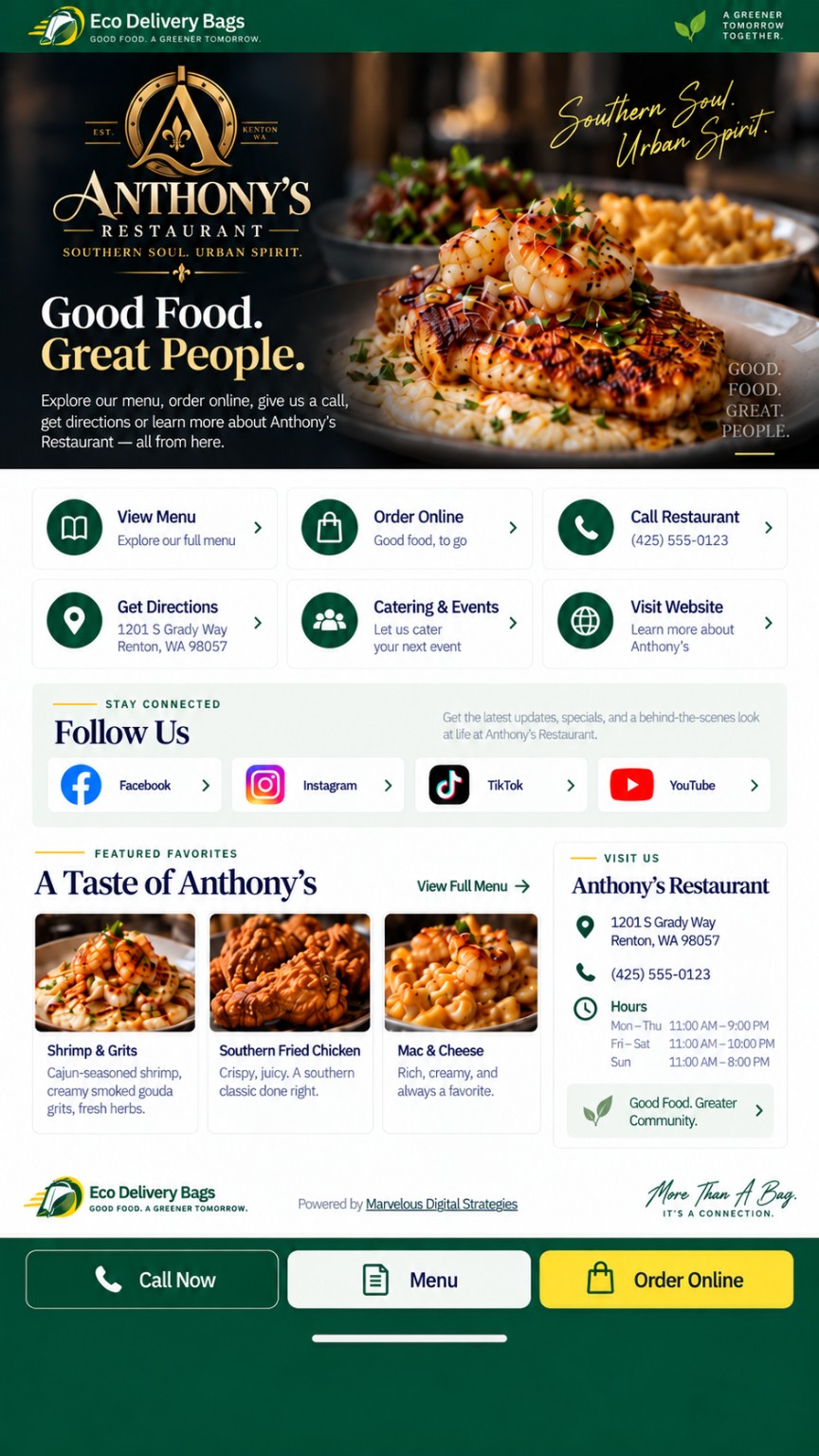
Learn how permanent QR links, restaurant guest pages, scan tracking, proof testing and honest reporting work on custom takeout bags.
Read the guide →Use restaurant delivery bags, food photography, menus, QR links and useful design to extend a takeout order into repeat brand exposure.
Read the guide →Understand proof approval, working-day production estimates, standard freight, paid expedited routes, tracking and delay communication.
Read the guide →Design reusable insulated delivery bags for mobile food brands, catering handoff, event visibility, recurring clients and direct reordering.
Read the guide →Share the quantity, design goal and required date. We’ll help organize the right next step without taking payment on this website.
Eco Delivery Bags guide
Paper can be efficient for one handoff. A reusable insulated tote can add presentation, capacity, temperature support and repeat brand exposure when the use case justifies it.
Paper can be efficient for one handoff. A reusable insulated tote can add presentation, capacity, temperature support and repeat brand exposure when the use case justifies it.
Final production, pricing and delivery details still depend on the approved artwork, manufacturer, destination and selected service.
Understand why construction, print area or QR architecture matters to the customer experience.
Evaluate quantity, timeline and cost alongside the expected use—not as isolated numbers.
Use the guide to identify the quantity, assets and questions that should go into the next conversation.
Practical takeaway: the best custom bag decision connects the physical product, the artwork, the proof, the shipping plan and the next customer action.
Paper bags are fast, familiar and disposable. Insulated reusable totes are designed to carry the food and remain useful after the order. A restaurant can use both, but the reusable bag should be treated as a higher-value brand asset.
A foil-lined tote helps create a more protected hot-or-cold handoff than an unlined paper bag. It does not replace proper food-safety procedures or guaranteed temperature control, but it gives the package a practical reason to be retained.
The paper bag’s visibility usually ends quickly. A reusable bag can appear at groceries, work, events, picnics and future pickups. The value comes from repeated exposure—not from pretending every bag will be used forever.
More surface area can produce a stronger campaign or a busier mess. Prioritize logo recognition, signature food, useful information and a clear QR action instead of filling every inch with copy.
Share the quantity, design goal and required date. We’ll help organize the right next step without taking payment on this website.
Eco Delivery Bags guide
The printed code should be permanent, the destination should remain manageable and the data should be described honestly.
The printed code should be permanent, the destination should remain manageable and the data should be described honestly.
Final production, pricing and delivery details still depend on the approved artwork, manufacturer, destination and selected service.
Understand why construction, print area or QR architecture matters to the customer experience.
Evaluate quantity, timeline and cost alongside the expected use—not as isolated numbers.
Use the guide to identify the quantity, assets and questions that should go into the next conversation.
Practical takeaway: the best custom bag decision connects the physical product, the artwork, the proof, the shipping plan and the next customer action.
The code printed on the bag should belong to one restaurant/location campaign. The destination behind that code can change, but the printed code should remain stable for the life of the bags.
A scan can record the campaign and then redirect the guest to the approved page. That makes it possible to count scans while preserving a controlled destination.
A menu click is a menu click. An order-link click is an order-link click. Neither automatically proves a completed order. Reporting becomes more credible when each metric keeps its real meaning.
Do not test a separate QR file and assume the production artwork is correct. Scan the QR from the final proof, confirm the correct restaurant page, confirm the event is recorded and confirm every visible destination works.
Share the quantity, design goal and required date. We’ll help organize the right next step without taking payment on this website.
Eco Delivery Bags guide
Utility creates the second impression. Recognition, useful information and a clear next action turn that extra life into practical marketing value.
Utility creates the second impression. Recognition, useful information and a clear next action turn that extra life into practical marketing value.
Final production, pricing and delivery details still depend on the approved artwork, manufacturer, destination and selected service.
Understand why construction, print area or QR architecture matters to the customer experience.
Evaluate quantity, timeline and cost alongside the expected use—not as isolated numbers.
Use the guide to identify the quantity, assets and questions that should go into the next conversation.
Practical takeaway: the best custom bag decision connects the physical product, the artwork, the proof, the shipping plan and the next customer action.
A customer keeps packaging because it is useful, not because the restaurant calls it advertising. Strong handles, insulation and a practical size create the reason to reuse it.
The front panel should identify the restaurant quickly. The menu, story, social links and longer information belong on supporting panels where the customer has time to look.
Use strong, accurate food imagery that reflects what customers can order. One memorable signature dish usually performs better than a collage of tiny items.
The bag can connect the customer to a menu, direct ordering, phone, directions, catering inquiry or social page. Pick the action that matters most instead of making every button equally loud.
Share the quantity, design goal and required date. We’ll help organize the right next step without taking payment on this website.